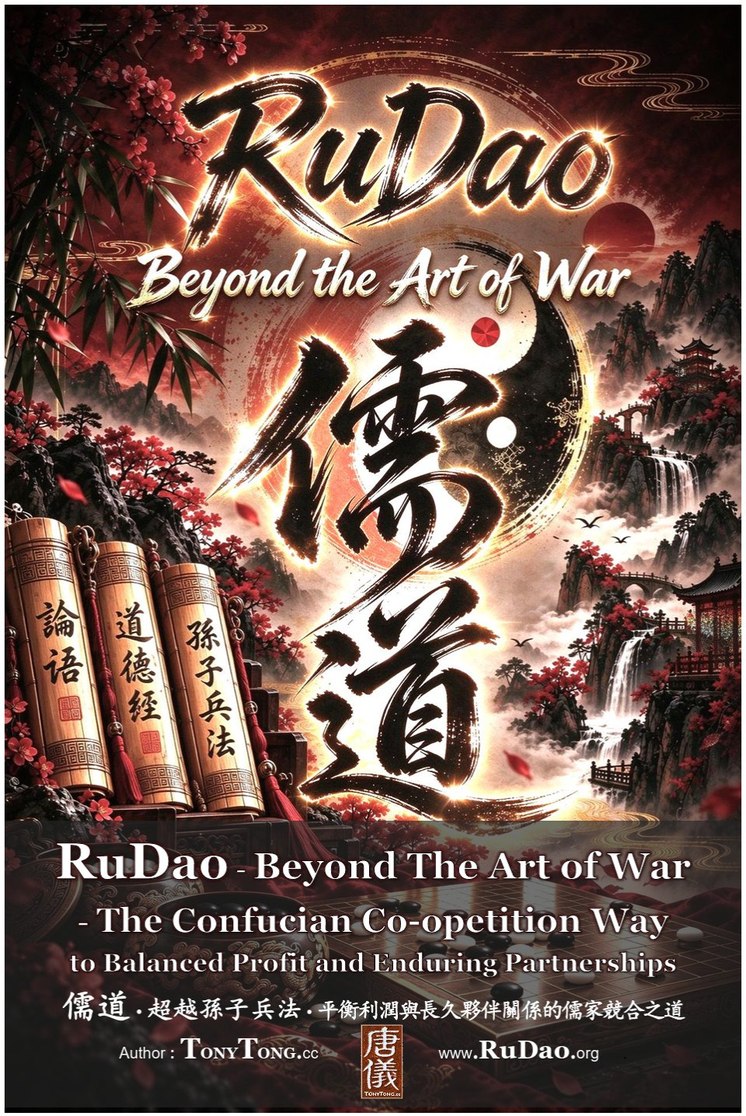
New Book · 2026 · TonyTong.cc

RuDao 儒道 by TonyTong.cc

RuDao · Beyond The Art of War

《儒道:超越孙子兵法》
· 平衡利润与长久伙伴关系的儒家竞合之道

The Confucian Co-opetition Way to
Balanced Profit and Enduring Partnerships

▶ RuDao English Voice Intro Narrated by Tony Tong 唐仪 — English edition Click the red button to play
0:00
0:00
▶ RuDao Chinese & English Bilingual Audio Intro 儒道 · 唐仪 — Bilingual 中英双语 narration Click the red button to play
0:00
0:00
I.

A New Way to Win

For two and a half thousand years, strategists have studied The Art of War. This book asks a different question.

The Old Way
兵家之道

Win by Conquest

Outmaneuver, outflank, outperform. Defeat the rival. Take the market. The world as a battlefield, competitors as enemies. Zero-sum: your gain is my loss.

The RuDao Way
儒商之道

Win by Co-opetition

Compete where it matters. Cooperate where it counts. Build partnerships that outlast the deal. Positive-sum: profit that endures because trust endures.

"Sun Tzu taught us how to defeat rivals. Confucius teaches us how to make rivals into partners."

— from the introduction

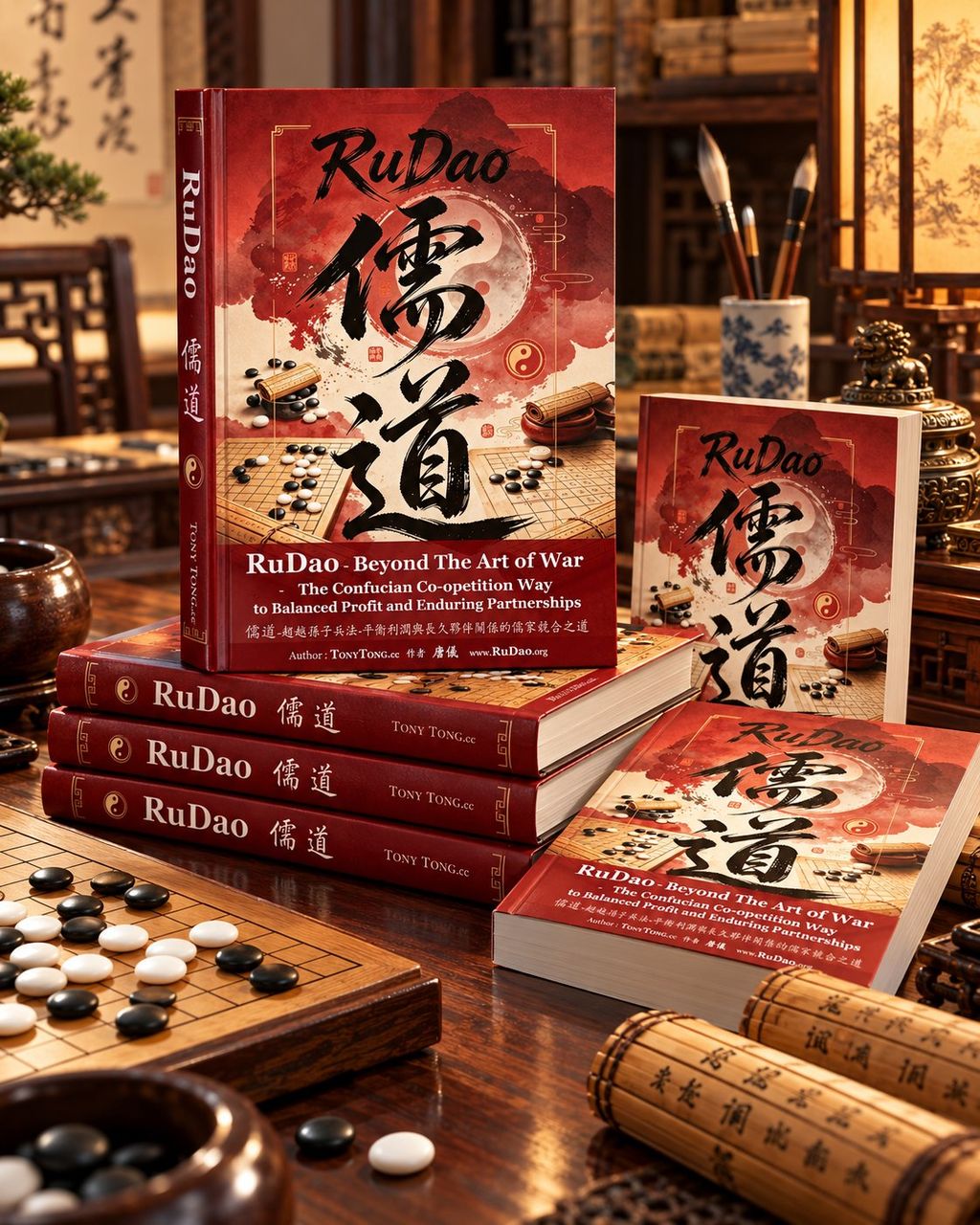
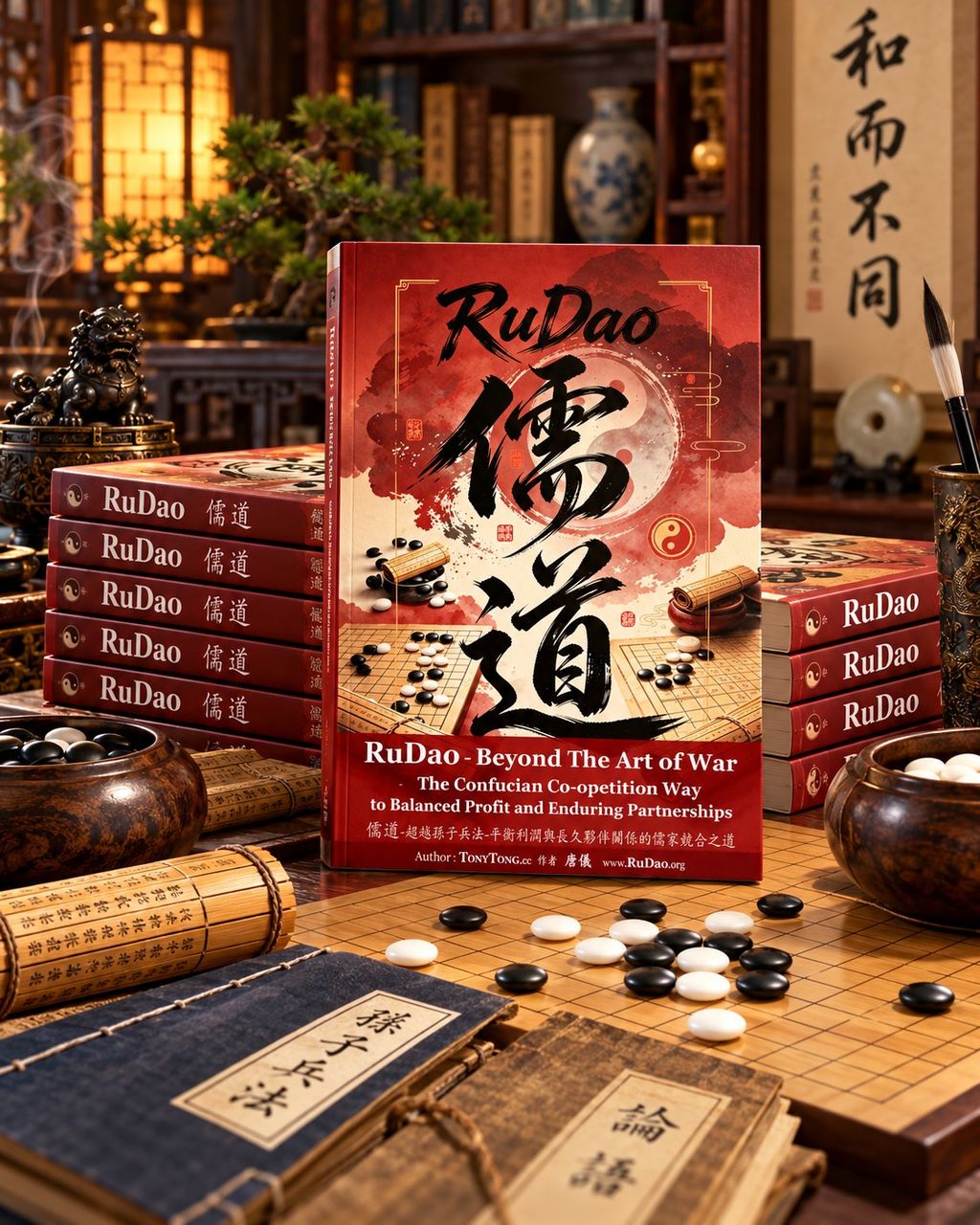
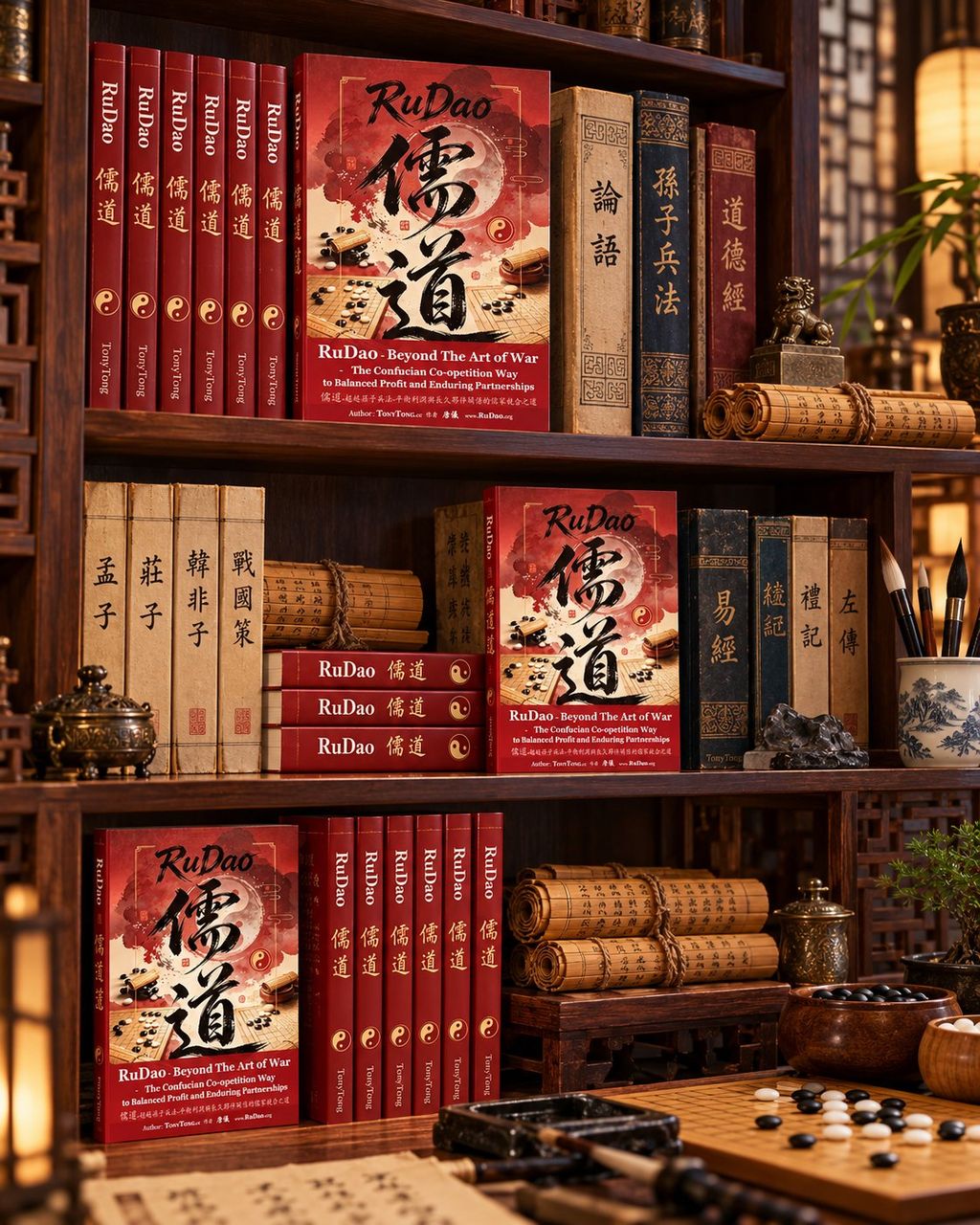
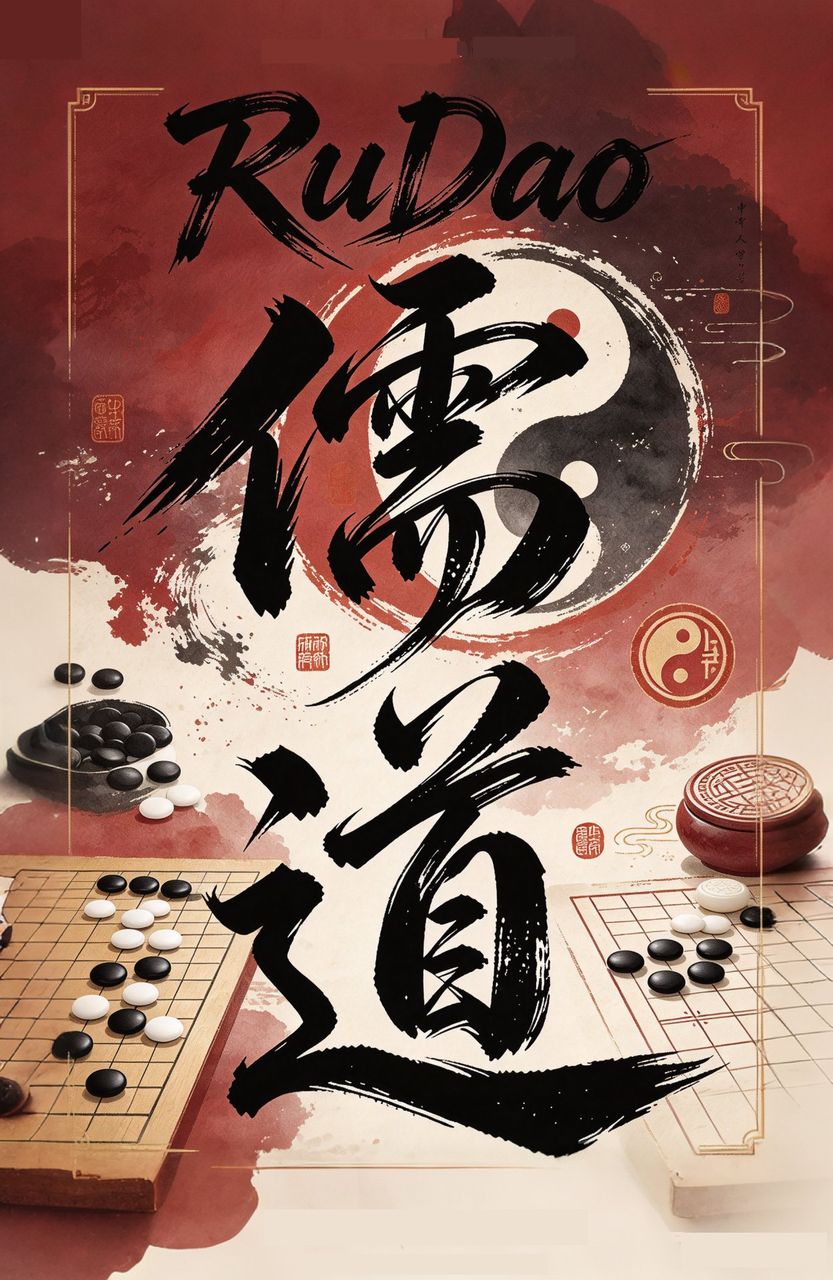
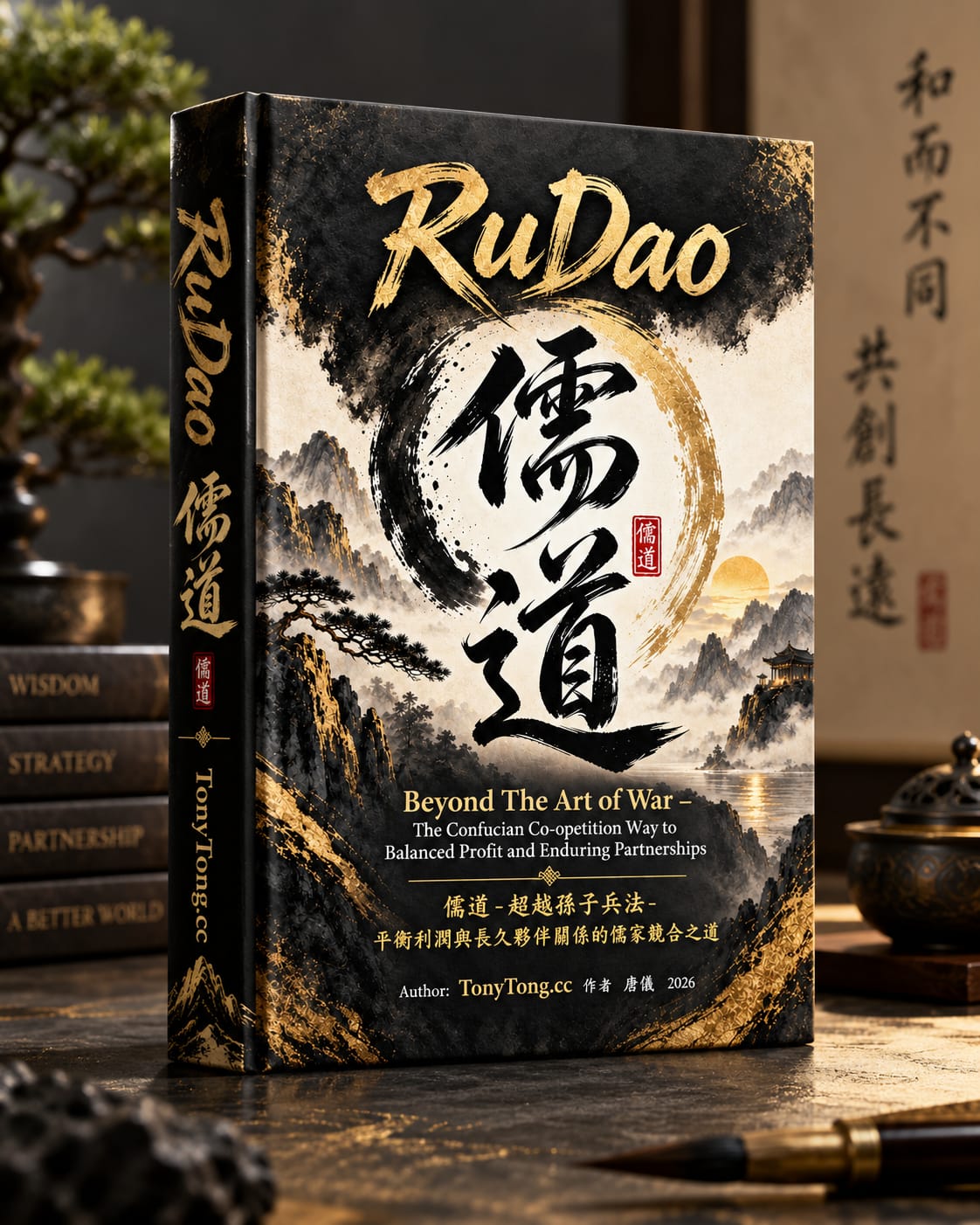
RuDao hardcover edition — vermillion 儒道 calligraphy with golden glow, Beyond The Art of War
II.

About the Book

A business philosophy for leaders who refuse to choose between profit and principle.

In RuDao, Tony Tong weaves two and a half millennia of Confucian thought with the hard realities of modern commerce. The result is neither a self-help book nor a strategy manual — it is a way: a frame for decisions, partnerships, and growth that produces balanced profit and relationships that don't break when the cycle turns.

Drawing on his decades across finance, technology and cross-border enterprise, Tony shows how the Confucian virtues are not soft ideals but operational disciplines — the operating system of enduring business. The book is structured in six parts — The Roots (源篇), The Confucian Core (儒篇), Ru + Dao (内圣外王), The Practice (实践篇), The Exemplars (范例篇), and RuDao in the Digital Age (数字时代) — spanning nine chapters from the Shang origins of commerce to the AI digital economy, with Front Matter (Foreword, Purpose, How to Read) and Back Matter (Afterword, Appendices, References).

长久以来,《孙子兵法》被奉为商业博弈的经典,教会人们战胜对手、夺取胜利。但以击败竞争者为目标的零和思维,常常摧毁合作根基、损耗信任、难以维系长期伙伴关系。《儒道-儒将》跳出单纯对抗的商战逻辑,阐释源自儒家思想的竞合之道:不必在利润和情义之间二选一,在激烈竞争的同时,依然可以构建稳固、长久的伙伴网络。

For generations, The Art of War has been revered as the bible of business competition. Yet zero-sum thinking focused on beating opponents often undermines cooperation, erodes trust, and makes long-lasting partnerships nearly impossible. RuDao moves beyond pure adversarial strategy and unfolds the Confucian path of co-opetition — profit and meaningful relationships do not need to be trade-offs.

  • TitleRuDao (儒道)
  • Chinese Subtitle《儒将:超越孙子兵法》
  • English SubtitleBeyond The Art of War
  • FrameworkRu-Jiang Co-opetition (儒将竞合)
  • AuthorTony Tong (唐仪)
  • Year2026
  • LanguageBilingual · English / 中文
Preface

"Though Zhou Was an Ancient State, Its Mandate Was Ever New"

周虽旧邦,其命维新 — Book of Songs · 诗经

When algorithms, artificial intelligence, and blockchain dominate the global commerce web, why do we still need to look back at Confucius and Mencius, who lived over two and a half thousand years ago? This is the central question I keep asking myself as I write this book.

In 1986, I graduated from King's College (Kings.edu.hk), Hong Kong — the same school that produced Professor D.C. Lau (Professor Din Cheuk Lau 劉殿爵教授), the authoritative English translator of The Analects 論語, Tao Te Ching 道德經 and Mencius 孟子 at the Chinese University of Hong Kong. As a junior alumnus of King's College, I was exposed to Confucian and Taoist culture from an early age through my teachers. From 2024–2026, I studied under Professor Xiao Xianhua (肖先华) and Mr. Zhang HaiBiao (张海标校长) in the HuaXue EnXue (HX357 Class 华学恩学) Chinese Studies, and received guidance from Taoist Master Ji Gong (季工 道长) of the Hong Kong Taoism Institute. I was inspired by Professor Tang Enjia (湯恩佳博士), President of the Hong Kong Confucian Academy (ConfucianAcademy.com 孔教學院院長).

My career has spanned Web1.0 to Web4: in 2000 I co-founded Pacificnet, a Nasdaq-listed company, and I hold a US Internet workflow patent. Today I teach AI, blockchain and Web3 at several universities, and have spoken at Goldman Sachs, JPMorgan, UBS and other global financial summits.

This dual experience — bridging traditional Confucianism, frontier technology and global finance — convinced me that Confucian thought is not a museum piece. It can provide a critical governance logic for the intelligent digital age.

The Art of War has long been treated as the bible of business strategy, teaching people how to defeat opponents. But zero-sum thinking, aimed at beating competitors, often destroys the foundations of cooperation, erodes trust, and makes long-term partnerships unsustainable.

This book steps beyond pure adversarial strategy and articulates the Confucian path of co-opetition (竞合) — the insight that one need not choose between profit and integrity. One can compete fiercely and still build a durable network of partners. Inner virtue alone is not enough to survive in a brutal global market; pure stratagem without ethical roots will eventually collapse. 儒商 (Ru-Shang) and 儒将 (Ru-Jiang) must work as one.

自序 · 以「周虽旧邦 其命维新」回应数字时代

「周虽旧邦,其命维新」

Though Zhou was an ancient state, its mandate was ever new.
——《诗经·大雅·文王》

当算法、区块链与人工智能重塑全球商业的底层逻辑,我们为什么仍要回望两千五百多年前的孔孟思想?这是写作本书时,我反复追问自己的核心命题。

我毕业于香港英皇书院(King's College),这所学校走出过《论语》权威英译者、香港中文大学教授刘殿爵 (DC Lau) 先生。作为刘教授的后辈校友,我自幼浸染儒家文化;其后又跟随华学体系创办人肖先華教授修习,并从香港孔教学院院长汤恩佳先生处深受启发。

我的职业生涯完整横跨了 Web1.0 到 Web3、Web4.0 的整个时代。2000年,我参与创办太平洋网(Pacificnet)并推动其于纳斯达克(Nasdaq)上市,拥有美国互联网工作流程发明专利;如今,我在多所高校主讲人工智能、区块链与 Web3 课程,并多次受邀在高盛、摩根大通、瑞银等国际金融机构峰会上发表主题演讲。

正是这种「东方儒学传统 × 前沿科技 × 全球金融实务」的跨界经历,让我日益确信:儒家思想并非束之高阁的古董,它恰恰能为智能数字时代提供一套关键的治理逻辑。

本书致力于搭建一座实操桥梁,打通《论语》的古典文本与二十一世纪的全球商业实践。它探讨仁、义、礼、智、信如何在 AI 伦理框架、DAO 去中心化组织与加密通证经济中获得当代诠释;也萃取古代、近代、当代儒商人物的真实案例,把「义利合一」的原则运用于跨境数字商业的竞争之中。

长久以来,《孙子兵法》被奉为商业博弈的经典,教导人们如何战胜对手。然而,以击败竞争者为核心的零和思维,往往摧毁合作的根基、损耗信任,令长期的伙伴关系难以为继。

因此,本书跳出单纯对抗的商战逻辑,阐释源于儒家思想的「竞合之道」——我们不必在利润与情义之间二选一,完全可以在激烈竞争的同时,构建稳固而长久的伙伴网络。仅有内在德行,不足以在残酷的全球市场立足;仅有谋略技巧,若缺失伦理根基,也终将走向崩塌。儒商与儒将,必须相辅相成、一体运行。

这不只是一部理论研究,更是一份行动指南。它面向企业家、投资人、技术从业者、学者,以及一切对「东方伦理如何面向数字未来」感兴趣的人。

唐仪 www.TonyTong.cc 2026 · Hong Kong
Tony Tong seal chop 印章 — 唐儀 · TonyTong.cc
III.

RuDao 儒道 —
Table of Contents 目录

六部九章 — 6 parts, 9 chapters, from the Shang origins of commerce to the AI digital age.

Front Matter前文
i Foreword 序言
ii Author: Why RuDao Matters Today 为什么今天需要儒道?
iii The Purpose of This Book 本书宗旨
iv RuDao and the AI Digital Economy 儒道与AI数字经济
v Who This Book Is For: Tech Executives & Entrepreneurs 读者对象 — 写给科技领导者、企业家与终身学习者
vi How to Read This Book 如何阅读
Part OneThe Roots 源 · The Source of the Commercial Tradition
Ch. 1 Shang (c. 1600–1046 BCE): Business Begins 商朝 · 商业起源
  • The Shang Dynasty — the origin of written Chinese commerce; the character 商 and the word 商人 (merchant)
  • Records of the Grand Historian · Biographies of the Money-makers(货殖列传):善因论 (the doctrine of "letting be"), the division of labor, and the natural pursuit of profit (人性趋利)
  • The wisdom of Fan Li (范蠡), Zigong (子贡), Bai Gui (白圭) — 智勇仁强 (wisdom, courage, benevolence, constancy)
  • Wealth and virtue: 君子富,好行其德 (the wealthy gentleman delights in practicing virtue)
  • RuDao Trust System: From ancient philosophy to global cross-border credit — the pivotal question: why virtue alone cannot survive the market
Part TwoThe Confucian Core 儒 · Righteousness + Profit, Harmony vs Co-opetition
Ch. 2 The Ethical Core: The Eight Virtues and Li Ren 八德 · 里仁
  • Why Sun Tzu Alone Is Not Enough 兵儒之辨
  • Co-opetition: Harmony in Difference 和而不同
  • The Eight Virtues of RuShang(儒商八德 仁义礼智信忠孝恕)as items of inner cultivation (内圣) and rules of outer conduct (外王)
  • Li Ren — Dwelling in Benevolence(里仁): benevolence as the core (以仁德为核心)
  • The core of the merchant's righteousness–profit distinction: 仁为体、义为用、忠恕贯之 (benevolence as substance, righteousness as function, threaded by loyalty and empathy)
Ch. 3 The Five Constants in Market Competition 仁义礼智信
  • The Five Constants 仁义礼智信 as the ethical code of enterprise in market competition
  • 义利并举、富而好礼 (righteousness and profit held together; the wealthy who love propriety)
Part ThreeRu + Dao 内圣外王 · Inner Sage, Outer King
Ch. 4 Confucian Structure, Daoist Spirit 以儒为骨,以道为神
  • The Confucian backbone: 正己 (self-correction), 礼 (propriety), 五常 (the Five Constants), 民本 (people-centeredness)
  • The Daoist spirit: 无为而治 (non-interference), 上善若水 (the highest good like water), 反者道之动 (reversal as the movement of the Way), 知止 (knowing when to stop)
  • 以德驭术 (governing technique with virtue)
Ch. 5 Inner Sage, Outer King, and the RuJiang 内圣外王 · 儒将
  • Origin: Zhuangzi · Tian Xia(庄子·天下篇)→ completed in the Confucian Great Learning(大学·八目); 内圣是根、外王是果
  • The Outer King as RuJiang 儒将 — Co-opetition Strategy Beyond The Art of War: the boundary of Sun Tzu; 竞合之道 (the way of co-opetition); negotiations turning counterparties into partners; surviving adversity and crisis; ancient wisdom from the Three Kingdoms; the RuJiang casebook
Part FourThe Practice 实践 · The Way of the Confucian Merchant
Ch. 6 RuShang: The Confucian Entrepreneur 儒商
  • The definition and ideal of the 儒商
  • Credibility and character — when business comes seeking you (信誉人格,生意来求你)
Ch. 7 Yi Before Profit 义先于利 — Wisdom of Asia's RuShang Leaders
  • How Humaneness (仁), Righteousness (义), and Profit (利) create sustainable wealth
  • Exemplars Across 2,500 Years: From ZiGong 子贡, Meng Luochuan 孟洛川 (Ruifu Xiang 瑞蚨祥), Zhang Jian 张謇 to Shibusawa Eiichi 渋沢栄一, Inamori Kazuo 稻盛和夫, Matsushita Kōnosuke 松下幸之助
  • Opening maxim: 人要去求生意,生意就难做;生意来求你,生意就容易做。靠的是你的信誉和人格 — Li Ka-shing(李嘉诚)
  • The voices of the tycoons: Robert Kuok (郭鹤年) on wealth and heirs; Li Ka-shing on credibility and character
Part FiveThe Exemplars 范例 · The Confucian Tycoons of Asia
Ch. 8 RuShang Exemplars: Asia's Confucian Tycoons 儒商先贤 · 亚洲儒商列传
  • Robert Kuok 郭鹤年(亚洲糖王); Li Ka-shing 李嘉诚(信誉人格 · 慈山寺); Tong Yun-kai 汤恩佳(500座孔子像)
  • Cao Dewang 曹德旺(玻璃大王 · 福耀科技大学); Chearavanont family 谢国民家族(利国利民利企业); Lucio Tan 陈永栽(华文教育)
  • Henry Fok 霍英东(爱国商人 · 水立方); Li family / BEA 李国宝家族(五代传承); Tung Chee-hwa 董建华(兴邦济世); Leung Chun-ying 梁振英(共享基金会); Li Tung-hoy 李东海(证券义商)
  • RuJiang: General → Merchant → Scholar: Three Generations of the Chen JiTang Family 儒将・儒商・儒家:陈氏三代 陈济棠家族 陈树柏 陈耀军 陈树渠 陈耀璋 — 兴学传家;儒商: 正己、守信、富而好德、兴学为报、慎终追远
Part SixRuDao in the Digital Age 数字时代
Ch. 9 RuDao in the AI Digital Economy 儒道 × AI 数字经济
  • RuDao Trust System in Web3/Web4: AI, blockchain, stablecoins, and programmable Trust
  • RuDao in the AI Digital Age: With Dr. Zhu Jia-ming(朱嘉明), Digital Economist
  • Dialogue of Civilizations and the New Confucian Business Civilization(文明对话与新儒商商业文明)— Toynbee, Ikeda
  • The Digital Giants Through the Lens(数字巨头的儒道之鉴): Apple(格物致知,大巧若拙); Google(仁者爱人,无为而治); Microsoft(诚意正心,知行合一); Amazon(以义驭利,苟日新)
  • The system for a personal IP and enterprise in the digital age
  • HuaXue 华学 — the Confucian Academy and modern RuShang education
  • A 30-year practitioner's witness: from Web1 to AI, Web3, Web4
  • The Inner Sage, the Outer King, and the Future(内圣外王与未来)— Conclusion
  • Synthesis: 以德驭术 as the operating system of the digital age
  • Closing: 以内圣之德,行外王之利 (move with the virtue of the inner sage and the benefit of the outer king)
Back Matter后文
i Afterword 后记
ii Appendix A · Classified Index of Quotes 《论语》原文对照《货殖列传》名句集
iii Appendix B · Core Terminology (Chinese–English) 核心术语中英对照
iv Sources & References 参考文献与链接
Co-Editors

RuDao 儒道 Co-Editors

编者 — Three co-editors who read the manuscript and wrote in its support.

01

Professor Kuang-Shih Yeh

RuDao Book Co-Editor · Ph.D. in Organization Theory, Carnegie Mellon University · Chair Professor, Chung Hua University

China has a long and profound commercial tradition. The Shang Dynasty, founded over three thousand years ago, was the earliest Chinese dynasty with written records. The word "Shang" itself stands for business, commerce, and merchants. It is said that the ancestors of the Shang people were highly adept at business and trade, which is how the dynasty came to be named "Shang".

Over two thousand years ago, the Records of the Grand Historian (Shiji) — the first book to systematically document Chinese history — included a dedicated chapter titled "Biographies of the Money-makers" (Huo Zhi Lie Chuan). Its core content focused on the path to wealth and the management wisdom of prominent historical merchants.

On the other hand, throughout successive dynasties, Confucianism and Taoism — the two most influential schools of thought shaping Chinese culture — have placed immense value on fundamental human principles and the philosophy of life. Chapter Two of this book, titled "The Eight Virtues," explores the essential ethical values familiar to every Chinese person. In traditional Chinese values, a respected and successful entrepreneur is honored as a "Confucian Entrepreneur" (Ru Shang). A Confucian Entrepreneur is not merely someone skilled at making money, but rather an individual who firmly upholds traditional Confucian core values while managing a business. I am delighted to see the author explain this concept of the "Confucian Entrepreneur" so clearly.

The author, Tony Tong, has received a complete education in both Western and Chinese traditions, possesses a deep understanding of cutting-edge technology, and brings a wealth of successful business experience. It can truly be said that he is a respected Confucian Entrepreneur himself.

By integrating the fundamental values and wisdom of Confucianism and Taoism into the modern business world, he emphasizes "co-opetition" rather than "zero-sum," proving that traditional Chinese wisdom remains fully applicable to today's complex commercial landscape. In an era marked by rapid technological advancements, complex dynamic environments, and geopolitical volatility, a guiding North Star is increasingly vital for business leaders. I am deeply grateful for Tony Tong's contribution in clearly articulating the wisdom of Confucian Entrepreneurs in this book. These insights serve as the North Star guiding us forward, making this a work well worth studying, whether or not you are actively engaged in the business world.

Professor Kuang-Shih Yeh 2026 / 10

About the Co-Editor

Professor Kuang-Shih Yeh holds a Bachelor's degree in Political Science from National Taiwan University, a Master's degree in Public Administration from the University of Delaware, and a Ph.D. in Organization Theory from Carnegie Mellon University. He currently serves as an Independent Director of Fubon Financial Holding Co., Ltd. and Clientron Corp, a Director of Pintrust Technology and Everjoy Health Group (Shanghai), Ltd., a Chair Professor at Chung Hua University, Honorary Chairman of the Taiwan Future Society, and Honorary Chairman of the Asia-Pacific Public-Private Partnership Association.

He has previously served as a Professor and Department Head of the Department of Business Management, Director of the Institute of Communication Management, Director of the Institute of Healthcare Management, and Executive Director of the EMBA program at National Sun Yat-sen University; Professor at the Institute of Technology Management and Intellectual Property Right at National Chengchi University; Visiting Professor at the School of Public Policy and Management, Tsinghua University (Beijing); and Visiting Professor at the School of Management, Fudan University (Shanghai). From 2008 to 2015 he also served in the public administration of the Taiwan region of China, including as Deputy Minister of the Research, Development and Evaluation Commission (RDEC), Political Deputy Minister and Minister of Transportation and Communications, first Chairman of Taoyuan International Airport Corporation, and later Vice Mayor of Kaohsiung City.

Additionally, he had served as an Independent Director for several companies, including Bank of Taiwan and Synnex Technology International Corp., Chief Operating Officer of Pacific Digital Media, and Vice Chairman of Shihlien Chemical Industrial Corp. He is the author of six management books, and has three times received the Golden Book Award from the Small and Medium Enterprise Administration, Ministry of Economic Affairs.
02

Thomas Cheung 張俊勇 MH JP

RuDao Book Co-Editor · HKBA Honorary Chairman · Former Delegate to the China National People's Congress (NPC) · Founding Partner, InnoAngel.com 香港英諾天使基金 · Council Member, Chinese General Chamber of Commerce Hong Kong · Co-Secretary-General, Hong Kong Blockchain Association (HKBA.cc)

I have known the author Tony Tong for over 10 years. Back between 1988 and 1991 we both attended universities in the United States, not far from one another. Tony studied Computer Engineering at the University of Minnesota (UMN.edu), while I pursued Applied Mathematics at the University of Wisconsin–Madison and later Cornell University (1991–1992).

In 2017, Tony and I co-founded the Hong Kong Blockchain Association (HKBA.cc), a leading industry body dedicated to blockchain application development, public education and regulatory advisory in Hong Kong. As an angel investor and partner at InnoAngel VC, I also invested in Com2000.org / 2000x.net, a prominent AI, blockchain and Bitcoin mining enterprise with operations across the United States.

This book RuDao goes far beyond The Art of War. It explores long-term co-opetition, enduring partnerships and cross-border strategic alliances. In today's AI, Web3 and blockchain era, we see an explosion of remote teams, distributed workers and digital nomads. Many of these cross-border collaborators, AI agents and digital avatars never meet face to face. Building trust and sustaining stable long-distance partnerships across different countries, cultures and legal systems has become one of the biggest challenges for global builders. This book delivers much-needed guidance for creating, maintaining and governing cross-border remote alliances.

At its core lies the principle of Yì Lì Hé Yī 义利合一 — Unity of Righteousness and Profit. This maxim is something I personally believe in and abide by in daily life, my investment decisions, and the management of all cross-border remote partnerships and alliances.

— Thomas Cheung MH JP www.ThomasCheung.cc

03

Prof. Timmy Tan 陳建榮

RuDao Book Co-Editor · HKBA Philippines · Founder of LaIsla Magazine and SK Techno-lube Corporation · Honorary Professor, International University of Cooperative Education (iUCE) Niedersachsen, Germany · Alumni, Peking University Entrepreneurs Association · Managing Partner (Philippines), Global CyberSecurity Alliance (GCSA)

I am Timmy Tan, son of Lucio Tan, Chairman of the Federation of Filipino-Chinese Chambers of Commerce and Industry.

I have known the author Tony Tong for more than twenty years. I first met Tony when he was working with Pacificnet, a Web1 e-commerce company that Tony founded and took public on NASDAQ in 2000. This year, I joined HKBA and its strategic-alliance partner, Global CyberSecurity Alliance (GCSA.ai), as the Managing Partner for the Philippines.

My father Lucio Tan is a steadfast, lifelong practitioner of Ru-Dao and Confucian RuShang philosophy. He firmly lives by the principle of Righteousness before Profit (义利合一) and continuously draws wisdom from the Dao De Jing (道德经), advocating co-opetition and harmonious collaborative development. Across his decades building a global business empire spanning banking, aviation, tobacco, and beer, my father always believed that much of his lasting success came directly from Ru-Dao thinking.

During the 2015 APEC summit in Manila, Tony Tong met my father at my corporate gala dinner. My father shared that from childhood, he formed a lifelong habit of studying and memorizing traditional Chinese literary and philosophical classics, including the Analects (论语), The Art of War (孙子兵法), the Three-Character Classic (三字经), the 300 Tang Poems (唐诗300首), and the Romance of the Three Kingdoms (三国演义).

In 2002, my father was invited to deliver a keynote speech at the First International Confucian-Business Forum in Beijing. In his landmark address titled "Integrity is the Foundation for Establishing and Developing Enterprises," Lucio Tan stated that Cheng Xin (诚信), or trustworthiness and integrity, is the unshakable foundation of every enterprise. Even amid severe business crises, my father insisted that integrity must never be traded away for short-term survival.

Today's AI-Web3-blockchain world is filled with distributed remote teams, digital-nomad communities, cross-border partners, and AI digital-avatar collaborators who may never physically meet. Building durable trust for long-distance cross-border alliances has become one of the greatest challenges facing global entrepreneurs.

Tony Tong's new book, RuDao, brilliantly transforms the real, lived RuShang practice of my father into actionable modern-day guidance. It does not merely quote ancient texts. Instead, it connects age-old Chinese entrepreneurial wisdom to the real-world pain points of digital-era co-opetition and remote-alliance building. Every founder, investor, and cross-border alliance-builder should read this work.

Prof. Timmy Tan 陳建榮 · HKBA Philippines · RuDao Book Co-Editor

Son of Lucio Tan, the iconic Filipino-Chinese tycoon and Chairman of Philippine Airlines (PAL), Philippine National Bank (PNB), Allied Bank, and the Federation of Filipino-Chinese Chambers of Commerce and Industry. Source: China News Service, August 22, 2002

Dedication

Dedication — 献言

I dedicate this book to my parents: my father, Tong Cho Sam, Founder and Chairman of the Tong Family Foundation, and my mother, Cindy Yip.

I am deeply thankful for the gift of my parents' nurturing and upbringing. My father graduated in 1965 from Shanghai Mechanical Institute, now renamed the University of Shanghai for Science and Technology (USST), as a qualified Electric-Mechanical Engineer. During his university years, he was an avid sportsman: a member of the basketball team, and a champion swimmer representing the university swimming team.

My father grew up and forged his path from HaiWuTian in Xing'an, Guilin, Guangxi. His life journey from HaiWuTian is documented in the biography "Songs Flying out of Haiwutian". He is an Honorary Citizen of Guilin, whose mountains and waters are praised as "most beautiful under heaven". Early in his career, he was a highly accomplished engineer working at Zhuzhou Instrument Factory in Hunan, making vital contributions to China's aerospace industry. As a distinguished EE/ME engineer, inventor and electronics entrepreneur, he took part in China's reform-and-opening-up entrepreneurial wave. He founded multiple electronics enterprises and factories across Hunan, Guangxi and Guangdong, specializing in television and related electronics industries, employing thousands of people and making substantial contributions to the society. He is also an accomplished painter skilled in drawing and Chinese calligraphy painting, as well as an accomplished Chinese dizi flute performer. He has performed dizi solos and collaborated with local orchestras on major stages at numerous middle schools and universities across Guilin.

I am forever grateful for my father's decades of guidance by words and deeds. He personally taught me the four arts of the Chinese scholar: Music 琴 qin, Chess 棋 qi, Calligraphy 书 shu, Painting 画 hua. He constantly encouraged me to endure hardship, holding firmly to the ancient maxim: "Only those who bear the hardest hardship may rise to greatness." He guided me toward balanced development of morality, intellect and physical fitness. Thanks to my parents' care, from childhood I received well-rounded training in academics, art, calligraphy, music, games of Chinese Chess and Go WeiQi, and sports including swimming, basketball, ice hockey and skiing. This balanced education nurtured my moral, intellectual and physical growth through the four arts and beyond.

I give thanks to my alma mater, King's College, Hong Kong. Its Chinese school motto is 慎思篤行, rendered in English as "Meticulous Thoughts, Diligent Action." This motto is more than a guiding phrase — it is a way of life. (School website: Kings.edu.hk)

I thank Master Teacher Xiao Xianhua 肖先华 of HuaXue-EnXue 华学恩学. Through his Huaxue lectures, I came to understand the path of self-cultivation through ritual, music and qin, which inspired the integrated Confucian-Daoist philosophy at the heart of this book.

I am also grateful to Principal Zhang Haibiao 张海标, who gave me profound insights into Confucian thought, RuShang Confucian-business ethics and traditional Chinese culture, especially the principles of "unity of righteousness and profit", and the long-lasting alliance cooperation business model.

Special Thanks to: Professor D.C. Lau, Din Cheuk Lau 劉殿爵教授 (1921–2010), the authoritative English translator of The Analects 論語, Tao Te Ching 道德經 and Mencius 孟子 at the Chinese University of Hong Kong (CUHK Library).

◆ ◆ ◆
IV.

Three Forms, One Way

Three editions of RuDao — each a different door into the same philosophy.

RuDao hardcover edition — vermillion 儒道 brush calligraphy cover
Premium Hardcover

The Heritage Edition

The flagship edition. Vermillion ink-brush cover art with the 儒道 calligraphy and yin-yang seal, the full bilingual design on cloth-bound hardcover. A book to keep, gift, and return to.

  • FormatHardcover · Cloth-bound
  • Pages~280 · Bilingual
  • ExtrasGold foil · Ribbon marker
RuDao collector's edition — vermillion 儒道 brush calligraphy cover
Collector's Box

The Scholar's Edition

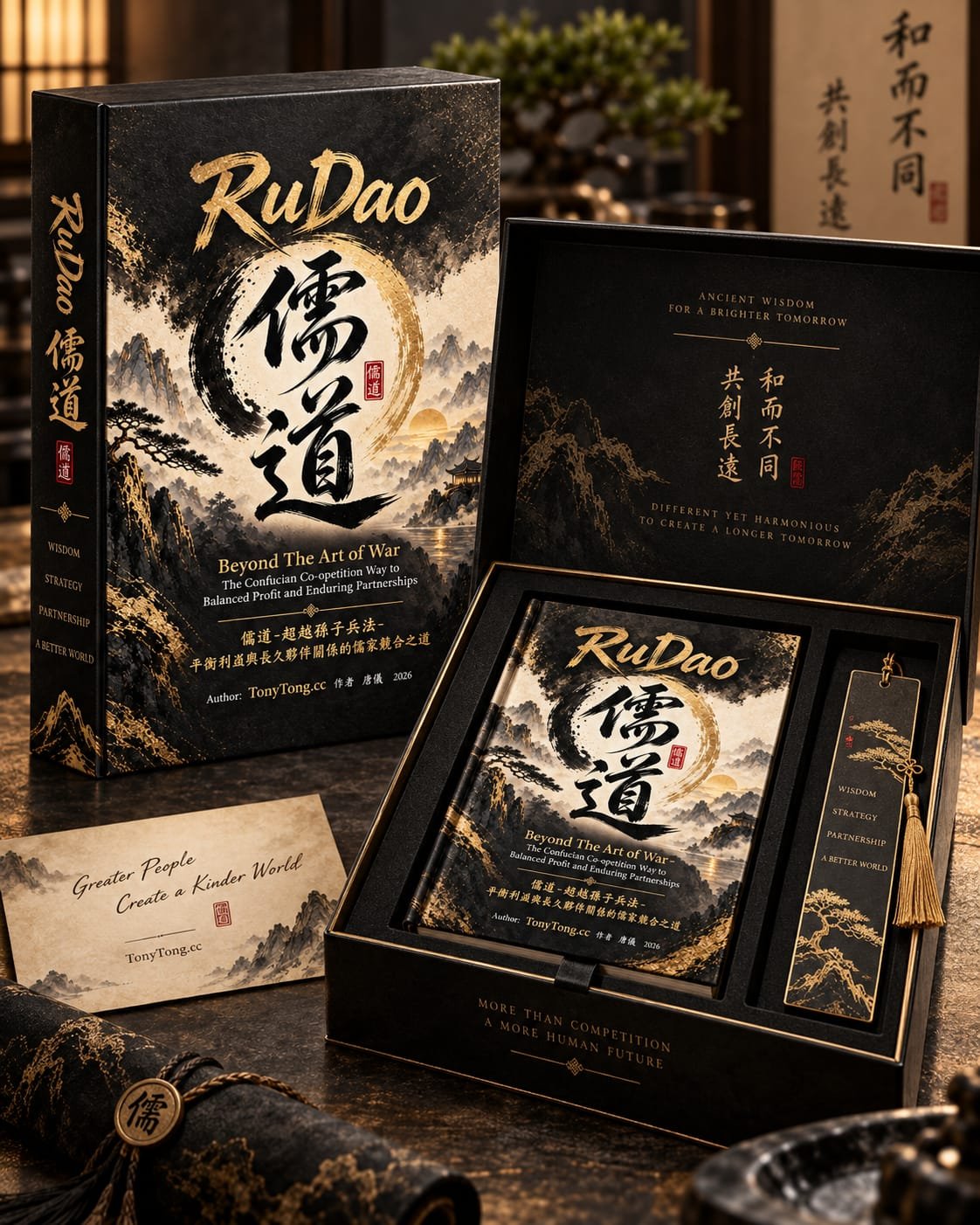
The book, a hand-lettered bookmark, a scroll with the central teaching 和而不同 · 共創長遠, and a keepsake card. Built for those who collect meaning, not just pages.

  • FormatHardcover + Display Box
  • IncludesBookmark · Scroll · Card
  • EditionNumbered · Limited
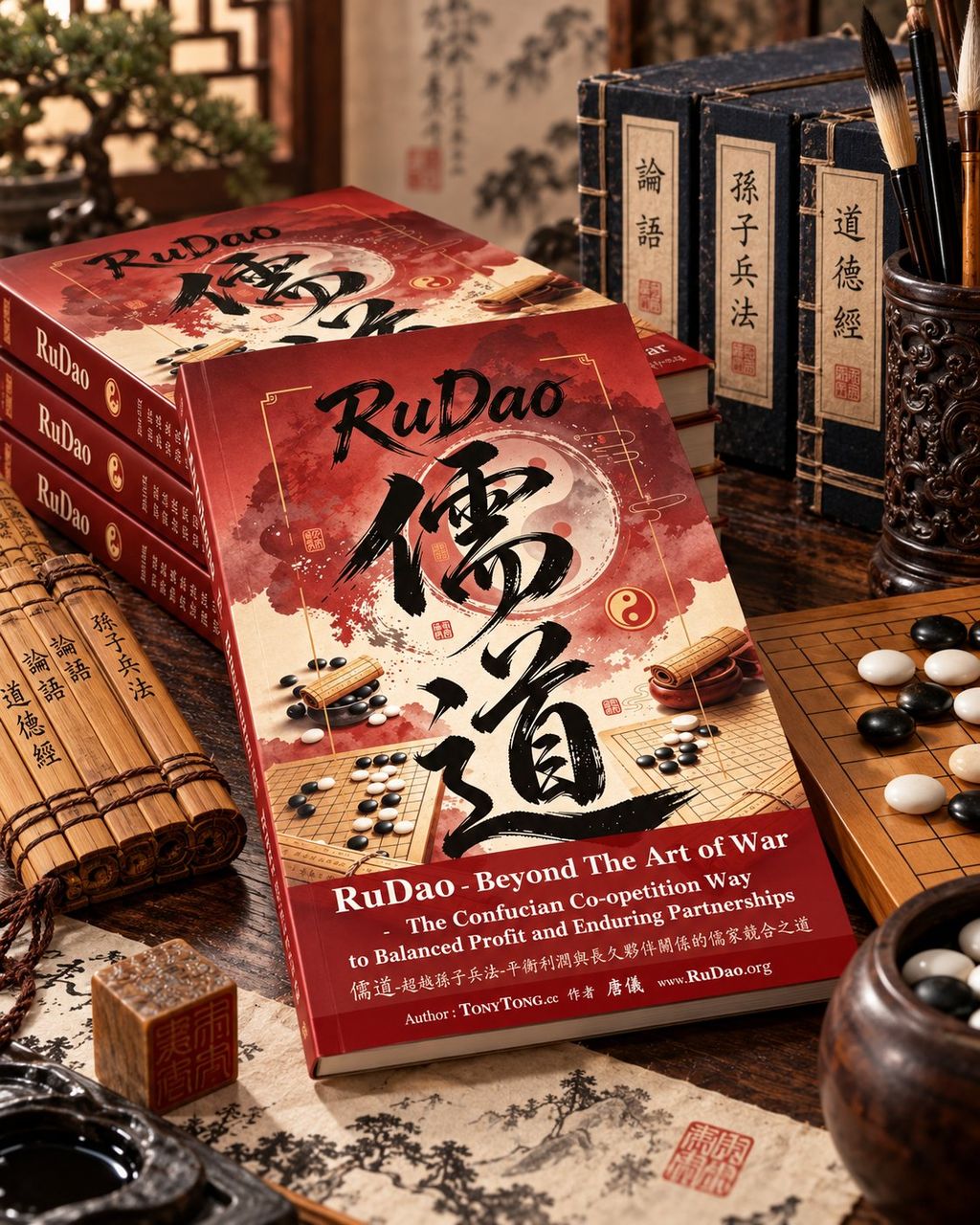
RuDao paperback edition — vermillion 儒道 brush calligraphy cover
Minimalist Cover

The Quiet Edition

The same philosophy, the same author, stripped to its essence: ink, paper, words. For readers who prefer the thought to the ornament — and the ornament to reveal itself on rereading.

  • FormatPaperback · e-Book
  • DesignTypography only
  • ForThe everyday reader
VI.

The Five Pillars

五常 · The Five Constants at the heart of RuDao

仁

Ren · Benevolence

Treat partners, employees and competitors as people, not positions. Profit earned with kindness compounds.

义

Yi · Righteousness

The courage to walk away from the deal that should never be made. Reputation is built in the deals you refuse.

礼

Li · Propriety

Form, ritual, the right words at the right time. In business, this is the architecture of trust.

智

Zhi · Wisdom

Knowing what to do, and — harder — what not to do. The strategic restraint of the sage.

信

Xin · Trust

The currency that outlasts every other. Enduring partnerships are built on the trust you cannot buy back.

VII.

Three Principles of Co-opetition

三大原则 — The operational core of RuDao, distilled from sixteen chapters into three disciplines.

01
义利共存

Profit & Trust Coexist

Profit is not the enemy of principle — greed is. When 义 (righteousness) and 利 (profit) are aligned, each reinforces the other. The Confucian merchant does not sacrifice margin for morals; he designs deals where the moral path is also the profitable one.

利润与信任共存:义利合一是儒商的根基。

02
竞合并行

Competition & Cooperation in Parallel

Compete where the market is real; cooperate where the value is shared. The modern enterprise is not a zero-sum arena but a layered ecosystem. RuDao teaches the strategic intelligence to know which layer you are in — and which mode to deploy.

竞争与合作并行:在竞争中寻求合作,在合作中保持竞争力。

03
共赢联盟

Win-Win Alliances

The goal is not to defeat the rival but to grow the pie together. Enduring partnerships — between companies, across borders, between founders and investors — are built when both sides define success as mutual flourishing, not unilateral victory.

共赢联盟:不是击败对手,而是共同做大蛋糕。

VIII.

Beyond The Art of War

孫子兵法 vs 儒道 — Not a rejection, but an evolution. The same world, a wider lens.

Dimension The Art of War
孫子兵法
RuDao
儒道
Core Logic Zero-sum game
零和博弈
Positive-sum game
正和博弈
Relationship to Rival Defeat the enemy
击败敌人
Make the rival a partner
化敌为友
Time Horizon Short-term victory
短期胜利
Sustainable, enduring partnerships
可持续长远关系
Strategic Posture Deception & maneuver
谋略与欺骗
Trust & transparency
信任与透明
View of Profit Maximize own gain
最大化己方利益
Balanced profit, shared value
平衡利润,共享价值
Ethical Frame Utility, not morality
功利,不论道德
Virtue as strategy
以德为略
Ultimate Goal Win the war
赢得战争
Build the alliance
建立联盟

RuDao does not discard Sun Tzu. It absorbs him. The Art of War remains the sharpest tool for the zero-sum layer — the battle you must win. But RuDao asks: must every encounter be a battle? The answer, confirmed by three decades of cross-border commerce, is no. The greater game is the one where the rival becomes a partner and the partnership outlasts the deal.

IX.

The Lineage

儒商 · 儒将 · 天人合一 — Three traditions, one way

RuDao does not invent a philosophy. It braids three strands of Chinese thought into a single cord strong enough for modern commerce — the virtue of the scholar-merchant, the strategy of the scholar-general, and the Taoist insight that heaven and humanity are one.

儒商
The Business Ideal

Confucian Merchant

Commerce conducted with integrity, not despite it. The 儒商 trades in trust as much as in goods — believing that a deal well made serves both counterparties, and that reputation is the only balance sheet that never needs auditing.

儒将
The Strategic Ideal

Confucian General

Power tempered by learning, force guided by virtue. The 儒将 wins without burning the field he intends to harvest — competing fiercely where stakes are real, but never mistaking a rival for an enemy.

天人合一
The Philosophical Root

Unity of Heaven & Humanity

From Taoism: the conviction that 天人合一 — heaven, earth and people form a single living system. Business is not separate from life; profit is not separate from people. Enduring success flows only from alignment with this whole.

核心语录 · Key Teachings

和而不同,共创长远。

Harmony in difference; co-create the long horizon.

义利合一,信立商道。

Righteousness and profit unified; trust establishes the merchant's way.

竞合并行,化敌为友。

Compete and cooperate in parallel; turn rivals into friends.

以德为略,以信为基。

Virtue as strategy; trust as foundation.

天人合一,商道即人道。

Heaven and humanity are one; the way of business is the way of being human.

匠人之心,共赢联盟。

The craftsman's heart; the win-win alliance.

Tony Tong (唐仪) — Author of RuDao
仪
Tony Tong seal chop 印章 — 唐儀 · TonyTong.cc
X.

The Author

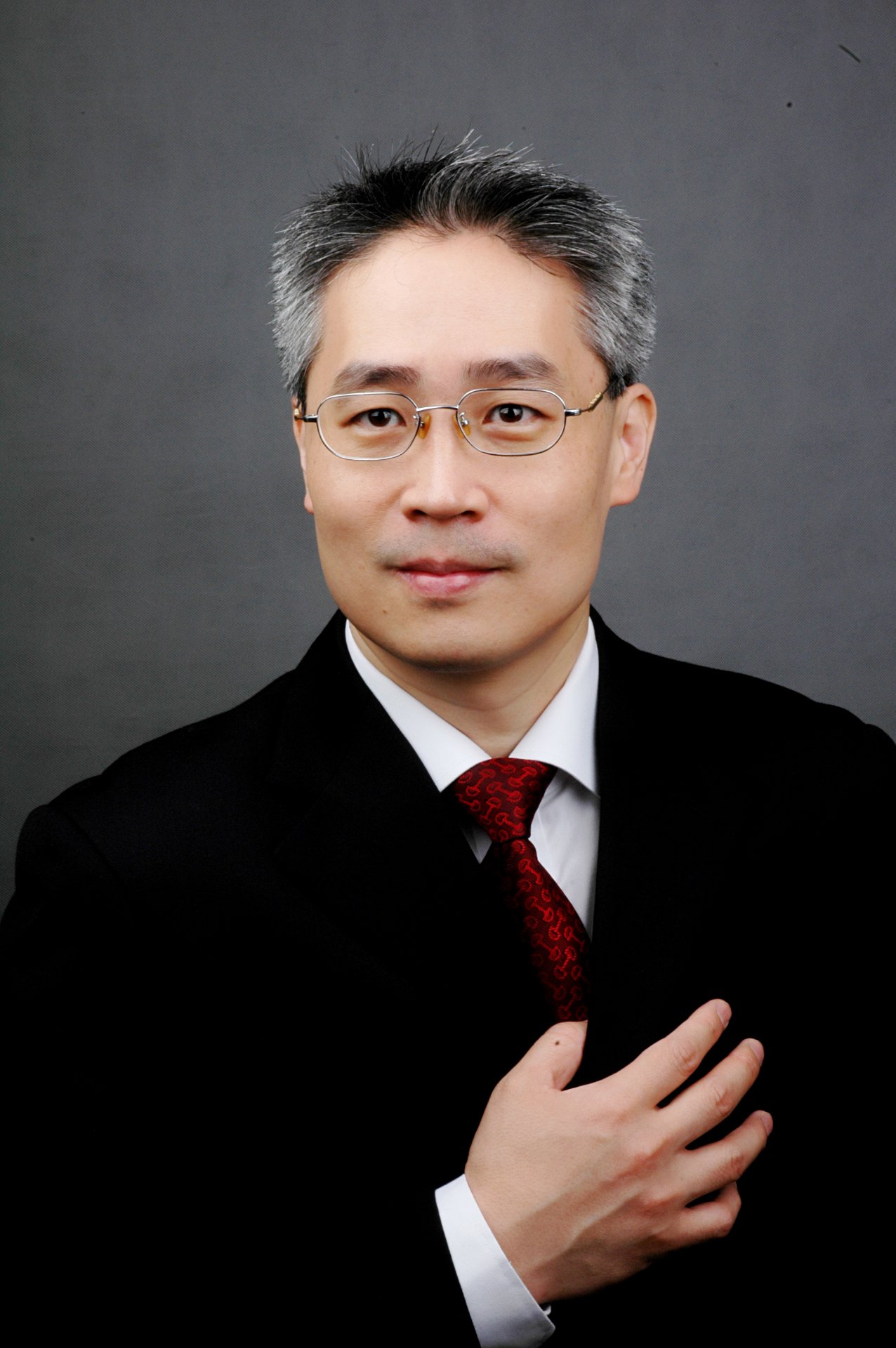
TonyTong.cc 唐仪

儒道 · 儒商 · 儒将 ·

儒商 · 儒将 · Cross-border Entrepreneur · Investor · HKBA Co-Founder · Adjunct Professor · US Patent Holder

Tony Tong (唐仪) is a global entrepreneur, seasoned cross-border investor, and business strategist. He is the co-founder of the Hong Kong Blockchain Association (HKBA) — Hong Kong's leading industry body for blockchain, fintech and Web3 — and an adjunct professor at the International Technological University (ITU.edu), the University of Minnesota, PolyU, and the Hong Kong Financial Services Institute (HKFSI).

With decades of experience spanning international commerce, fintech, cross-border negotiation, and global alliance building, he has witnessed countless zero-sum business conflicts, short-term victories, and broken partnerships across global markets. He holds US Patent No. 6,012,066 for an Internet workflow system and is a frequent event speaker at UBS, Goldman Sachs, Morgan Stanley, JPMorgan Chase, Bank of America Merrill Lynch, CLSA, Jeffries, Roth Capital, G2E, GITEX, Consensus, Korea Blockchain Week, Vietnam Blockchain Association, Economist, and Forbes.

Tony integrates Confucian ethics with modern global business strategy. Moving beyond the purely competitive mindset of The Art of War, he created the 儒将竞合战略 (Ru-Jiang co-opetition framework) — a balanced strategic system that combines fierce competition with sincere cooperation, profit pursuit with long-term trust, and individual success with enduring partnership value.

He writes as a 儒商 — a Confucian merchant who believes commerce and conscience are not opposites — and as a student of the 儒将 tradition, the scholar-general who wields strategy without surrendering virtue. RuDao draws these lineages together with the Taoist insight of 天人合一 — the unity of heaven and humanity — to offer a way of business that is balanced, enduring, and whole.

RuDao is the book he wished he had when he started.

Co-Founder Hong Kong Blockchain Association (HKBA)
Adjunct Professor ITU.edu · UMN · PolyU · HKFSI
US Patent No. 6,012,066 · Internet Workflow
Featured Speaker UBS · Goldman Sachs · Morgan Stanley · JPMorgan · BofA · CLSA · Jeffries · Roth · G2E · GITEX · Consensus · Economist · Forbes

Also

Serial Entrepreneur Angel Investor Programmer · Inventor Polyglot Charcoal Artist AI Music Creator 琴棋書畫
XI.

Pre-Order on Amazon

RuDao is now open for pre-order on Amazon. Secure your copy of the bilingual hardcover or e-book edition today — available worldwide.

📦 Available in Hardcover, Kindle, and Audiobook
🚚 Worldwide shipping · Bilingual English / 中文

Pre-order now on Amazon · ASIN: B0HJ458RRC

📕 Hardcover Premium edition · Bilingual
📱 e-Book Kindle · Apple Books · Kobo
🔊 Audiobook Narrated · Coming soon
XII.

Contact the Author

Questions, speaking invitations, bulk orders, or thoughts on RuDao? Write to Tony directly — 联系作者 · 欢迎留言.

Your message goes to the author only — no mailing list, no sharing. · 您的留言只会送达作者本人,不会被用于任何邮件列表或第三方。

XIII.

Reader Reviews · Endorsements

38 Endorsements · Reader reviews / Testimonials / Ratings 读者评语  ·  Endorsements / Blurbs 推荐语

Professor Kuang-Shih Yeh 葉匡時教授

Vice Mayor of Kaohsiung City 2018–2020, Taiwan

China has a long and profound commercial tradition. The Shang Dynasty, founded over three thousand years ago, was the earliest Chinese dynasty with written records. The word "Shang" itself stands for business, commerce, and merchants. It is said that the ancestors of the Shang people were highly adept at business and trade, which is how the dynasty came to be named "Shang". Over two thousand years ago, the Records of the Grand Historian (Shiji)—the first book to systematically document Chinese history—included a dedicated chapter titled "Biographies of the Money-makers" (Huo Zhi Lie Chuan). Its core content focused on the path to wealth and the management wisdom of prominent historical merchants. On the other hand, throughout successive dynasties, Confucianism and Taoism—the two most influential schools of thought shaping Chinese culture—have placed immense value on fundamental human principles and the philosophy of life. Chapter Two of this book, titled "The Eight Virtues," explores the essential ethical values familiar to every Chinese person. In traditional Chinese values, a respected and successful entrepreneur is honored as a "Confucian Entrepreneurs" (Ru Shang). A Confucian Entrepreneurs is not merely someone skilled at making money, but rather an individual who firmly upholds traditional Confucian core values while managing a business. I am delighted to see the author explain this concept of the "Confucian Entrepreneurs" so clearly. The author, Tony Tong, has received a complete education in both Western and Chinese traditions, possesses a deep understanding of cutting-edge technology, and brings a wealth of successful business experience. It can truly be said that he is a respected Confucian Entrepreneur himself. By integrating the fundamental values and wisdom of Confucianism and Taoism into the modern business world, he emphasizes "co-opetition" rather than "zero-sum," proving that traditional Chinese wisdom remains fully applicable to today's complex commercial landscape. In an era marked by rapid technological advancements, complex dynamic environments, and geopolitical volatility, a guiding North Star is increasingly vital for business leaders. I am deeply grateful for Tony Tong's contribution in clearly articulating the wisdom of Confucian Entrepreneurs in this book. These insights serve as the North Star guiding us forward, making this a work well worth studying, whether or not you are actively engaged in the business world.

中國有悠久深厚的商業傳統。立國於三千多年前的商朝,是中國最早有文字的朝代。而「商」就是代表商業、商人,據說,商朝人的祖先很會做生意,經營商業,故以「商」為名。兩千多年前,第一本完整記錄中國歷史的書籍《史記》有一專篇「貨殖列傳」,其內容重點就是歷史上知名商人的致富之道與經營智慧。

另一方面,歷朝歷代以來,影響中國思想與文化最重要的儒家與道家,非常重視做人的基本價值與處世之道,《儒道 RuDao 》這本書的第二章「儒商八德」談的就是每個中國人都熟悉的基本倫理價值。在中國傳統的價值觀裡,受人尊敬的成功商人被稱之為「儒商」,儒商未必是很會賺錢的商人,而是能在經營事業時,仍能堅守傳統儒家的基本價值。我很高興見到作者把這個「儒商」的觀念,講得這麼清楚。

作者唐儀TonyTong 受過完整的中西方教育,理解前沿科技,且具有豐富成功的商業經驗,可以說,他就是一位受尊重的儒商。他把儒家與道家的基本價值與智慧融入現代商場上,強調要「競和」而非「零和」,證明傳統中國智慧仍能適用於現代的複雜商業社會。面對科技迅猛發展、環境複雜多變、地緣政治動盪不安的新時代,引領企業經營者前進的北極星日益重要。感謝唐儀的貢獻,在這本書清楚地闡揚中國的儒商智慧,而這些儒商智慧就是引導我們前進的北極星,不論你是否是在商場上馳騁,這本書都值得我們研讀。

— 葉匡時教授 Professor Kuang-Shih Yeh - 台灣大學政治系學士、美國德拉瓦大學公共行政碩士以及美國卡內基梅隆大學組織理論博士。現任富邦金控以及公信電子獨立董事、蘋信科技以及上海悅心健康集團董事、中華大學講座教授、陽明山未來學社榮譽理事長以及亞太公私合夥建設發展協會榮譽理事長。 曾任中山大學企管系教授兼主任、傳播管理研究所所長、醫務管理研究所所長以及 EMBA 執行長,政治大學科技管理所教授,北京清華大學公共管理學院客座教授,上海復旦大學管理學院講座教授等職。在馬英九政府時期,先後擔任過行政院研考會副主委、交通部政務次長、部長,以及桃園機場公司首任董事長,後來也曾擔任過高雄市副市長。曾任台灣銀行、聯強國際等多家公司獨立董事、太平洋聯網科技營運長、實聯精密化學副董事長等職務。著有《總經理的新衣》、《總經理的內衣》等六本管理專書,並三度榮獲經濟部中小企業處金書獎。

Dr Jiaming Zhu 朱嘉明教授

Economist · 2nd October 2026

Long-term business success depends on balancing profit and moral responsibility, competition and cooperation, strategy and trust. In RuDao, Tony Tong brings Confucian thought together with his experience in cross-border business, offering a framework for corporate decision-making and partnerships that combines ethics with competitiveness.

Beginning with the principle of generating profit through righteousness and the virtues of the Confucian entrepreneur, the book explores strategic choices in negotiations, alliances and crises, linking inner moral cultivation with leadership in the wider world. The book’s discussion of AI governance, Web3 and the token economy places traditional thought in a new technological context. It invites readers to consider how benevolence, righteousness, propriety, wisdom and trustworthiness can become practical business principles, enabling the pursuit of profit alongside the development of enduring partnerships.

商业的长期发展,需要处理好利润与道义、竞争与合作、策略与信任的关系。唐仪的《儒道》将儒家思想与自身跨境商业实践相结合,为企业决策与伙伴关系提供兼顾伦理和竞争力的思考框架。

本书从“义以生利”与儒商德性出发,讨论谈判、同盟和危机中的战略选择,并将“内圣”与“外王”联系起来。书中对人工智能治理、Web3与Token经济的讨论,将传统思想置于新的技术环境之中,启发读者思考:如何把仁、义、礼、智、信转化为经营原则,在追求利润的同时,建立持久的合作关系。

— Dr Jiaming Zhu - 2nd October 2026 朱嘉明 2026.10.2

About the Endorser · 推荐人简介

Dr. Jiaming ZHU 朱嘉明 — 经济学家 Economist 著名经济学家、经济学博士、教授

  • 现任横琴粤澳深度合作区数链数字金融研究院 学术与技术委员会主席(Academic & Technical Committee Chairman, Hengqin Digital Finance Research Institute)
  • 1984 年莫干山会议主要发起人和组织者之一,上世纪 80 年代「改革四君子」之一
  • 曾任联合国工业发展组织(UNIDO)经济学家、维也纳大学(University of Vienna)任教
  • 国内最早系统研究区块链、数字经济、NFT、Web3.0、元宇宙、AI 的学者之一

代表作包括《国民经济结构学浅说》《现实与选择》《非均衡增长》《从自由到垄断:中国货币经济两千年》《第三种存在:从通用智能到超级智能》

TC Yam Tak Cheung 任德章 MH

Chairman, Integrated Capital 本滙融資主席 · 3rd October 2026

In investing, the greatest returns come from time, and time rewards those who can be trusted. In RuDao, Tony Tong begins from the Confucian principle of generating profit through righteousness, and shows that integrity is not a cost of doing business but an asset that compounds and never depreciates.

The book does not reject The Art of War; it moves beyond it. Competition need not be zero-sum, and today's rival can become tomorrow's partner. Drawing on decades of cross-border experience and the Confucian ideal of uniting inner cultivation with outward leadership, Tony offers entrepreneurs, investors and managers a practical framework for long-term thinking. At a time of rapid geopolitical and technological change, this wisdom of building on trust and profiting through righteousness deserves careful reading.

在資本市場,真正的回報往往來自時間,而時間只會站在值得信任的人一邊。唐儀的《儒道》以「義以生利」為起點,說明誠信並非經營的成本,而是一項可以持續累積、永不折舊的資產。

本書並不否定《孫子兵法》,而是在其基礎上更進一步:競爭不必是零和,今天的對手亦可成為明天的夥伴。作者結合數十年跨境經營的經驗,以「內聖外王」貫通德性與策略,為企業家、投資者與管理者提供一套可實踐的長期主義思考。在地緣格局與科技急速變化的今天,這種以信立業、以義取利的智慧,尤其值得細讀。

— Yam Tak Cheung, MH · Chairman, Integrated Capital 任德章 MH 本滙融資主席 · 3rd October 2026 2026年10月3日

About the Endorser · 推荐人简介

TC Yam 任德章 — 「福布斯的中国买家」香港商人 · Forbes Buyer from Hong Kong

Dr. Zhao Tao 赵涛博士

Chairman, Shandong Buchang Pharmaceuticals 山东步长制药股份有限公司董事长(股票代码 603858)

儒家思想,指引现代商业文明;德是商之本,信是利之源!

— Dr. Zhao Tao 赵涛博士 · 董事长 山东步长制药股份有限公司(股票代码 603858)Shandong Buchang Pharmaceuticals

Reference · 相关报道

步长制药董事长 赵涛博士:赋能“独角兽”成长的新范式 — 21世纪经济报道 · 2026/8/25 全球独角兽大会 Global Unicorn Summit:

“内地聚焦硬核技术研发与产业化落地,香港作为国际资本运作、BD合作与跨境并购的核心支点,是中国科创独角兽连接全球市场、开启全球化第二增长曲线的最优路径。” — 赵涛博士 Shandong Buchang Pharmaceuticals

Prof. Timmy Tan 陳建榮

HKBA GCSA Manila, Philippines · Son of Lucio Tan

I am Timmy Tan, son of Lucio Tan, Chairman of the Federation of Filipino-Chinese Chambers of Commerce and Industry.

I have known the author Tony Tong for more than twenty years. I first met Tony when he was working with Pacificnet, a Web1 e-commerce company that Tony founded and took public on NASDAQ in 2000. This year, I joined HKBA and its strategic-alliance partner, Global CyberSecurity Alliance (GCSA.ai), as the Managing Partner for the Philippines.

My father Lucio Tan is a steadfast, lifelong practitioner of Ru-Dao and Confucian RuShang philosophy. He firmly lives by the principle of Righteousness before Profit (义利合一) and continuously draws wisdom from the Dao De Jing (道德经), advocating coopetition and harmonious collaborative development. Across his decades building a global business empire spanning banking, aviation, tobacco, and beer, my father always believed that much of his lasting success came directly from Ru-Dao thinking.

During the 2015 APEC summit in Manila, Tony Tong met my father at my corporate gala dinner. My father shared that from childhood, he formed a lifelong habit of studying and memorizing traditional Chinese literary and philosophical classics, including the Analects (论语), The Art of War (孙子兵法), the Three-Character Classic (三字经), the 300 Tang Poems (唐诗300首), and the Romance of the Three Kingdoms (三国演义).

In 2002, my father was invited to deliver a keynote speech at the First International Confucian-Business Forum in Beijing. In his landmark address titled "Integrity is the Foundation for Establishing and Developing Enterprises," Lucio Tan stated that Cheng Xin (诚信), or trustworthiness and integrity, is the unshakable foundation of every enterprise. Even amid severe business crises, my father insisted that integrity must never be traded away for short-term survival.

Today's AI-Web3-blockchain world is filled with distributed remote teams, digital-nomad communities, cross-border partners, and AI digital-avatar collaborators who may never physically meet. Building durable trust for long-distance cross-border alliances has become one of the greatest challenges facing global entrepreneurs.

Tony Tong's new book, RuDao, brilliantly transforms the real, lived RuShang practice of my father into actionable modern-day guidance. It does not merely quote ancient texts. Instead, it connects age-old Chinese entrepreneurial wisdom to the real-world pain points of digital-era coopetition and remote-alliance building. Every founder, investor, and cross-border alliance-builder should read this work.

我是 陈建荣 TimmyTan 菲华商联总会理事长陈永栽之子。

我认识本书 RuDao 作者唐仪 TonyTong.cc 已经超过二十年。当年唐仪创办 Web1 时代创新电商企业 Pacificnet,并于 2000 年登陆纳斯达克上市,我便加入香港区块链协会 HKBA 及其战略联盟伙伴全球网络安全联盟 GCSA.ai,担任菲律宾区管理合伙人。

家父陈永栽(Lucio Tan)是儒道思想与儒家儒商理念坚定的终身践行者。家父恪守义利合一,不断从《道德经》汲取智慧,倡导竞合与和谐协作发展。数十年间,陈永栽 打造横跨银行、航空、烟草、啤酒行业的跨国商业帝国,他始终认为自己事业能够基业长青,很大一部分源自儒道思想。

2015 年具有里程碑意义的马尼拉 APEC 峰会上,唐仪有幸与家父陈永栽会面。家父 分享 自少年时代便养成研读、背诵中华典籍的习惯。除《论语》《孙子兵法》《周易》之外,家父陈 还能够大段背诵《三字经》《唐诗 300 首》《古文观止》与《三国演义》。

2002 年, 陈永栽 受邀出席在北京举办的 首届中华儒商国际论坛 并发表主旨演讲,演讲题目为《诚信是创建发展企业之本》。 陈永栽 提出:诚信 是所有企业不可动摇的根基。即便身处严峻商业危机, 家父 坚决主张,绝不能为换取短期生存而出卖诚信。

当下 AI‑Web3‑区块链世界,遍布分布式远程团队、数字游民社群、跨境合作伙伴,以及从未线下碰面的 AI 数字分身协作者。为远距离跨境联盟构建稳固信任,已经成为全球创业者面临的最大挑战之一。

《RuDao》将 家父陈永栽 亲身践行的儒商实践,转化为可落地的现代行动指引。本书并非简单摘抄古籍,而是把中华千年创业智慧,对接数字时代竞合、远程联盟建设的现实痛点。每一位创业者、投资人、跨境联盟建设者都应当阅读本书。

— Prof. Timmy Tan 陳建榮Founder of LaIsla Magazine and SK Techno-lube Corporation - Honorary Professor, International University of Cooperative Education (iUCE) Niedersachsen, Germany - Alumni, Peking University PKU Entrepreneurs Association - Managing Partner (Philippines), Global CyberSecurity Alliance GCSA Son of Lucio Tan, the iconic Filipino-Chinese tycoon and Chairman of Philippine Airlines (PAL), Philippine National Bank (PNB), Allied Bank, and the Federation of Filipino-Chinese Chambers of Commerce and Industry 菲华商联总会、菲律宾航空、菲律宾国家银行、联盟银行董事长陈永栽之子。 资料来源: 中国新闻网 2002‑8‑22 https://www.chinanews.com.cn/2002-08-22/26/214616.html

Ji Gong 季工

Taoism Master · Beijing Taoism Association 北京市道教协会理事

TonyTong 儒道 RuDao.org 推荐语:儒家文化是中国优秀传统文化的重要组成部分。也是我们古往今来多少成功人士必读的一本经典语句。它这里边的一些经典是我们每个人都息息相关的。既是做人之道,又是为官之道生存之道。经商之道,用兵之道等等,更是修身齐家治国平天下的法宝。只要我们知行合一,按照儒家的传统思想志于道,据于德,游于仁,游于艺。我们人生就会无往而不胜。

— Ji Gong 季工 · Taoism Master · Beijing Taoism Association 北京市道教协会理事 · 北京西顶庙道长 · 国家非物质文化遗产合体字书法传承人

Shi Ping 石平 — 《儒道》序 · A Preface

Chairman, URIT.com 桂林优利特医疗电子有限公司

TonyTong 唐仪 先生撰《儒道 RuDao》一书,融儒道古学,观照AI时代的商业变革,立论新颖,启人深思。承蒙相邀,嘱我作序,展卷品读,心有戚戚,谨抒拙见,置于卷首。

世间论商者,多援引《孙子兵法》,将商场类比沙场。诚然,《孙子》审时度势、知止慎战之智,可资经营参考。然兵者,国之大事,死生之地,存亡之道,征伐本是不得已而为之,其内核是零和博弈,不可直接移植作为商业立身之本。

民间谓营商为“生意”,二字藏深意:所谓生意,乃是生生不息,创造价值。商业本是社会日常活动,核心在于为上下游伙伴、服务对象增益价值。市场竞争,并非同业之间你死我活的对决;真正的高下之分,在于谁能为客户创造更多、更好、更受社会认同的价值,评判权,终究归于消费者。经营追求共生,而非攻伐;贵在共赢,而非制胜。

此书以儒家立本心,以道家为运用,阐扬“商业向善 无为而治”的儒商正道。道家之“无为”,绝非怠惰躺平,而是摒除机心诡算,不妄为、不贪求短期浮利。经营者循事物本然之理,建良制、厚信任、育生态,守仁义礼智信的底线,明义以生利、义利合一的道理。

今AI浪潮奔涌,技术极大释放生产力,提升效率。但工具愈强大,愈离不开人文的引领与人心的温度。AI精于推演、运算、筹策,却与生俱来没有良知与价值坚守。若仅以新技术作为博弈逐利之器,商业终将沦为冰冷的算计。

技术为器,向善为道。越是技术狂飙的时代,越要坚守有思想、有温度,持续造福人类的经营理念。商业向善,向上而行,此乃颠扑不破之大道,亦是亘古恒存之商道。

愿阅此书者,跳出“商场即战场”的固有执念,汲取儒道和合的智慧,守正笃行,于世事经营之中葆守初心,创造长久的社会价值。

是为序。

— Shi Ping 石平 · 丙午年秋 于桂林 Guilin China · 桂林优利特医疗电子有限公司 URIT.com

Steve Chen 陈安之

USA · Author of Success Strategy

RuDao goes past the competitive logic of The Art of War. It introduces Confucian‑style co‑existence thinking, for anyone looking to build more lasting business partnerships.

Author: Success Strategy · Success Strategy on Amazon · facebook.com/taiwan331

ThomasCheung.cc 張俊勇 MH JP

Former Deputy to the National People's Congress (Hong Kong)

Supporting Statement for RuDao by Tony Tong

I have known Tony Tong (唐仪 TonyTong.cc) for more than a decade. He is a man of righteousness - one of the rare people I would genuinely call a true RuShang儒商 (Confucian entrepreneur): someone who seeks both moral integrity and practical success.

Our connection goes back to our student days in the United States. In 1988-1992, Tony studied Computer Engineering at the University of Minnesota (UMN.edu). I completed a Bachelor of Science in Computer Science, Statistics and Mathematics at the University of Wisconsin–Madison (Class of 1991), followed by a Master of Engineering in Operations Research and Industrial Engineering at Cornell University (Class of 1992).

In 2017, Tony and I co-founded the Hong Kong Blockchain Association (HKBA.cc), where I am a founding member and honorary chairman. I have seen firsthand how Tony, as the head of HKBA, has worked tirelessly to build and connect blockchain communities in Hong Kong and globally. Under his leadership, HKBA has become a platform that brings together founders, investors, developers, enterprises, academics and policymakers; promotes applied blockchain adoption, public education and regulatory dialogue; and strengthens Hong Kong’s role as a bridge between China and the global Web3 ecosystem. His community-building work is rare and deserves deep appreciation.

As an angel investor and partner at InnoAngel.com, I also invested in Com2000.org / 2000x.net, a leading US-based enterprise in AI, blockchain and Bitcoin mining.

RuDao extends well beyond The Art of War. It examines long-term coopetition, durable partnerships and cross-border strategic alliances. In this age of AI, Web3 and blockchain, remote teams, distributed workers and digital nomads—and increasingly AI agents and digital twins—collaborate across continents, often without ever meeting in person. Building trust and sustaining stable long-distance cooperation across different countries, cultures and legal systems has become one of the greatest challenges for global entrepreneurs. This book offers vital intellectual guidance for building, maintaining and governing cross-border remote alliances.

At its core is YiLiHeYi义利合一 - the unity of righteousness and profit. This is the principle I hold in my own life, my investment decisions and my management of cross-border remote alliances. I recommend RuDao wholeheartedly to anyone building trust and lasting partnerships in the AI era.

我认识本书作者唐仪(TonyTong.cc)已逾十年。他为人重义,是我极少愿意称为真正“儒商RuShang”的人——既守道义,也成就事业。

我们的缘分始于美国求学时期。1988至1992年间,唐仪在明尼苏达大学(UMN.edu)攻读计算机工程;我则在威斯康星大学麦迪逊分校(University of Wisconsin–Madison)取得计算机科学、统计与数学理学士学位(1991届),其后在康奈尔大学(Cornell University)取得运筹学与工业工程工程硕士学位(1992届)。

2017年,我与唐仪共同创办香港區塊鏈協會(HKBA.cc),我是创会成员及荣誉主席。我亲眼见证唐仪作为协会负责人,如何不遗余力地凝聚香港及全球区块链社群。在他带领下,HKBA 搭建平台,连接创业者、投资人、开发者、企业、学者与监管机构,推动区块链应用落地、公众教育与监管对话,并强化香港作为中国与全球 Web3 生态之间的桥梁角色。他对社群建设的贡献,实属罕见,值得高度肯定与感谢。

作为天使投资人、英诺天使基金(InnoAngel.com)合伙人,我投资了Com2000.org / 2000x.net,这家美国头部企业布局人工智能、区块链与比特币挖矿。

《儒道RuDao》一书的格局超越《孙子兵法》。书中探讨长期竞合、持久伙伴关系与跨境战略联盟。身处AI、Web3与区块链蓬勃发展的时代,远程团队、分布式工作者、数字游民,以及AI智能体与数字分身,跨洲协作,很多伙伴终生无需线下会面。在不同国家、文化与法律体系之下建立信任、维系稳定的远距离合作,已成为全球创业者面临的最大难题之一。本书为搭建、维护与治理跨境远程联盟,提供了至关重要的思想指引。

全书根基是义利合一 YiLiHeYi 即道义与利益的统一。这也是我信守的人生准则,贯穿于日常生活、投资判断以及跨境远程伙伴联盟的管理之中。我诚挚推荐《儒道RuDao》给每一位在AI时代构建信任与长久合作的人。

— “YiLiHeYi is the foundational trust principle for cross-border remote alliances, digital nomads and Web3 builders in the AI era.” -- Thomas Cheung MH JP “义利合一,是AI时代数字游民、Web3建设者搭建跨境远程联盟的信任根基。” ThomasCheung.cc 張俊勇 MH JP 香港區塊鏈協會 HKBA.cc 荣誉主席及创会成员 原港区全国人大代表 - 香港英诺天使基金 InnoAngel.com 合伙人 - HKBC Gold Limited 主席CEO

Jason Guo

Founder, StarSpace Capital 创始人

推荐语 for TonyTong.cc:做早期投资这些年,我见过太多项目不是输在技术和商业模式,就是输在团队散了。唐仪 TonyTong 先生的新作《儒道 RuDao》把话说开了:孙子教人怎么赢对手,他问的是赢完之后关系还在不在。

《儒道》没把儒家思想拿来讲修养,而是拿来当生意的规矩:该争的地方争,该一起把盘子做大的地方别内讧,利润和信任不是二选一。AI 这波,工具会更强,但信任只会更贵。本书从兵法里拉出来,写成能用的框架,比任何一本商战鸡汤有用。

— Jason Guo · Founder, StarSpace Capital 创始人

Kong Yanqing 孔彦卿

Council Member, Confucius Culture Inheritance Working Committee · 74th-generation descendant of Confucius

Business tests a person’s integrity when profit is at stake and reveals the breadth of their regard for others. Confucianism teaches us to “consider what is right when faced with gain,” while Taoism teaches us to “follow the natural order.” These teachings encourage business leaders to consider others as they pursue profit, respect the underlying order of things, discern when to advance or step back, and exercise restraint amid change. As a descendant of Confucius, I have always believed that profound business wisdom lies in remaining faithful to one’s principles and commitments as interests and circumstances change, preserving the possibility of lasting growth for all involved.

Drawing on years of international business experience, Tony Tong explores in Ru-Tao the balance between the pursuit of profit and enduring partnerships. The value of this inquiry lies in bringing benevolence, righteousness, and trust into concrete business relationships, while taking conflicting interests and competitive pressures seriously. The difficulties of cooperation often emerge when interests change: whether promises can be kept, how gains should be distributed, and whether partners retain the opportunity to continue working together. It is through these choices that Confucian and Taoist wisdom acquires practical significance. I recommend this book to every business leader who values integrity and takes the long view. Lasting business relationships ultimately depend on earning one another’s trust through action when interests change.

商业最考验一个人在利益面前的操守,也最照见其对待他人的格局。儒家讲“见利思义”,道家讲“道法自然”,启发经营者在追求利润时顾及他人,在变化之中尊重规律、知进退、守分寸。身为孔子后裔,我始终认为,商业智慧的深处,在于利害变幻之际,仍能守住信义,为彼此留下长久的生机。

唐仪 TonyTong 先生以多年跨国商业实践为基础,在《儒道RuDao》中探讨利润追求与长久伙伴关系之间的平衡。这一思考的可贵之处,在于将仁义与信任放回具体的商业关系之中,认真面对利益分歧与竞争压力。合作的难处,往往在利益发生变化之后:能否兑现承诺,如何分配所得,又能否为对方保留继续合作的空间。儒道智慧在这些选择中,才显出切实的分量。我愿将此书推荐给每一位看重信义、着眼长久的经营者。商业的长久,终究要在利益变化之后,以行动赢得彼此的信任。

— Kong Yanqing - Council Member, Confucius Culture Inheritance Working Committee, China Traditional Culture Promotion Association - 74th-generation descendant of Confucius 孔彦卿 - 中国传统文化促进会孔子文化传承工作委员会理事、孔子第74代孙

Eddy Chi Ho Ko 高志豪 香港 英皇書院同學會 King's College KCOBA.org Kings.edu.hk

Hong Kong · King's College Old Boys Alumni (KCOBA) · Ex-Greater China Director of Labuan IBFC, Malaysia

Endorsement for RuDao · Beyond The Art of War by Tony Tong

As someone who has navigated the complexities of business and leadership in Hong Kong for years, I have seen countless books on strategy, negotiation, and competition. Yet few have truly captured the cultural and philosophical depth required to build lasting success in today’s interconnected world. Tony Tong's RuDao - Beyond The Art of War does exactly that—and more.

This ebook is not merely another take on Sun Tzu's Art of War. It boldly moves beyond the classic win-lose paradigm and offers a refreshing, Confucian-inspired framework of co-opetition—where profit and partnership coexist, and where long-term relationships outweigh short-term victories. Tony eloquently bridges ancient Chinese wisdom with modern business realities, showing readers how to balance commercial ambition with ethical responsibility and mutual respect.

What resonates most with me is the book's practical relevance. Whether you are a startup founder, a corporate executive, or a negotiator, RuDao provides actionable insights on how to cultivate trust, manage conflict, and create value that endures. In a world often obsessed with disruption and domination, Tony reminds us that true strategic mastery lies in harmony, not conquest.

I highly recommend RuDao - Beyond The Art of War to anyone seeking a more sustainable, humane, and ultimately more successful approach to business and life. Tony Tong has written a timely and transformative guide!

— Eddy Chi Ho Ko, Hong Kong, King's College Old Boys Alumni KCOBA Ex-Greater China Director of Labuan IBFC of Malaysia Government

Li RunMin 李润铭

HKBA Beijing · 题:以儒立身 以道养心

“儒道 RuDao”二字,不仅是书名,更是中国人数千年来的精神底色。在这本书里,我的朋友没有做枯燥的学理考据,而是将儒家的进取与道家的超脱化作了笔下的烟火与山河。读这本书,像是在喧嚣尘世中寻得一处清凉地——既有“知其不可而为之”的执着,又有“乘天地之正”的逍遥。如果你也在入世与出世之间徘徊,这本书会给你最好的答案。

Mark Xiao XinHua 肖新華

Toronto

读《儒道 RuDao 》有感

多伦多的秋夜总是来得很早,窗外枫叶在路灯下泛着微红,凉意顺着窗缝渗进书房。我泡了一壶陈年普洱,翻开唐仪先生的《RuDao儒道-超越孙子兵法》,原本只想在睡前随手翻阅几页,却不知不觉读到了深夜。合上书本时,茶已微凉,心中却涌起一股久违的温热。在这个充满不确定性的时代,能遇到这样一本既有文化厚度、又有实战温度的书,实属难得。

诚于书:从书斋到战场的跨越

读唐仪先生的书,最先打动我的是他的“诚”。这不是那种四平八稳的学术腔调,而是一个在商海沉浮数十年的实战者,把真金白银换来的教训与智慧,毫无保留地摊开在读者面前。

全书分为内圣篇、外王篇、融合篇三大部分,结构严谨却不刻板。唐先生提出的“儒将竞合”“义利共存”“竞合并行”“共赢联盟”等核心概念,不是凭空捏造的理论,而是他从Web 1.0到Web 4.0的跨界实战中提炼出的生存法则。他生于桂林,十岁来港,十八岁赴美,1986年从香港大学毕业,2000年联合创立纳斯达克上市企业Pacificnet,持有美国互联网工作流技术专利,又曾在高盛、摩根大通、瑞银等顶级金融机构的峰会上演讲。这样的履历,让他笔下的每一个字都带着泥土和硝烟的气息。

他谈AI治理、Web3,不是赶时髦,而是真正思考过这些前沿技术如何与儒家智慧结合。他强调“内圣外王”——儒商与儒将必须是同一个人,这话说得斩钉截铁,没有半点含糊。读这样的书,你不会觉得作者在居高临下地教导你,而是像一位老友在炉火旁,把半生心得娓娓道来。

诚于心:利润与道义并非不可兼得

书中有一句话让我反复咀嚼:“义以生利”。这是子贡的智慧,也是唐先生一生的信条。在商学院里,我们被教导利润最大化是企业的天职,道义往往被当作锦上添花的装饰,甚至被视为成本的负担。但唐先生用他的经历告诉我,这两者并非不可兼得,关键在于“诚”。

信,是不贬值的资产。在区块链的世界里,共识机制靠的是代码和算力;但在人的世界里,共识靠的是“诚”。唐先生作为香港区块链协会的联合创始人,比谁都清楚技术的边界,但他更清楚,技术再先进,也替代不了人与人之间那份沉甸甸的信任。

我曾在多伦多经历过几次商业谈判,对方精明、专业,但眼神里总有一丝戒备。后来我试着放下套路,把底牌亮出来,把困难和诚意都说清楚,反而促成了合作。这不是天真,而是明白了“诚”才是最高效的沟通方式。唐先生在书中引用儒家经典,不是复古,而是在提醒我们:在算法越来越聪明的时代,人之所以为人,就在于那份不计较短期得失的“诚”。

诚于行:知行合一在多元土壤中的生根

多伦多是一座移民城市,商业环境多元而复杂。在这里,你每天都会遇到不同文化背景、不同价值观的人。初来乍到时,我曾试图用一套放之四海而皆准的“西方商业逻辑”去应对一切,结果屡屡碰壁。

读完《儒道》,我才意识到,真正的“外王”,不是把一种模式强加于人,而是在尊重差异的基础上,找到“竞合并行”的平衡点。唐先生说“儒将竞合”,这个“竞”字用得极妙。竞争不是零和博弈,而是在竞争中彼此成就;合作也不是无原则的妥协,而是在共同目标下的相互砥砺。

在多伦多,我见过太多企业因为文化冲突而分崩离析,也见过少数族裔企业因为坚守“诚”而赢得主流市场的尊重。唐先生的书让我更加确信:知行合一,不是把书本上的道理生搬硬套到现实中,而是在每一次选择、每一次谈判、每一次危机处理中,都问问自己:我的心,诚不诚?

诚致远:写给这个时代商业人的一封信

如果让我用一句话总结这本书,我会说:这是一封写给这个时代商业人的信。

我们正处在一个“超越孙子兵法”的时代。孙子讲“兵者,诡道也”,那是冷兵器时代的生存智慧;但在今天这个万物互联、信息透明的世界里,“诡道”的成本越来越高,而“诚”的收益越来越大。唐先生提出的“共赢联盟”,不是乌托邦式的幻想,而是对现实最清醒的回应。化敌为友,不是软弱,而是格局;共赢联盟,不是施舍,而是远见。

我常想,如果更多商业领袖能读一读这本书,或许我们的商业世界会少一些尔虞我诈,多一些彼此成就。唐先生没有给我们一套万能公式,但他给了我们一颗“诚”心。有了这颗心,无论技术如何迭代,市场如何变幻,我们都能找到属于自己的“儒道”。

合上书,窗外的枫叶在风中轻轻摇曳。多伦多的秋夜依旧微凉,但我的心里,却像被一盏灯照亮了。诚于书,诚于心,诚于行,诚致远——这八个字,不仅是唐仪先生的《儒道》,也是我想对自己、对这个时代说的话。

— 肖新华 2026年10月3日 于多伦多

Geoffrey Wang 王西华

第一和谐投资有限公司董事长、天使投资人

商业世界长久推崇《孙子兵法》,讲究博弈取胜、克敌制胜。但历经数十年跨境投资与创业实践,我深深体会:短期的博弈胜利易得,长久可信的伙伴关系难建。

唐仪(Tony Tong)先生新作《儒道 RuDao 超越孙子兵法》,跳出零和博弈的商战思维,把儒家“义以生利”的古老智慧转化为数字化时代可落地的儒将竞合体系。书中不否定兵家谋略,而是更进一步告诉我们:竞争之外尚有合作,击败对手不如化对手为盟友;利润与道义并非二选一,义利合一、竞合并行,方能构建可持续的共赢联盟。

这本书打通内圣修养与外王战略,将中华传统智慧对接AI、Web3等前沿商业场景,为企业家、投资人、跨境从业者提供一套兼顾利润、信任与长远价值的商业哲学。

非常推荐每一位看重长期主义、重视伙伴生态的商业领导者细读。

祝贺《儒道 RuDao》电子书、有声书于亚马逊全球上线!

Sarah Li

CEO and founder of BlackpearlChain.io, Silicon Valley, USA

"After three decades in Silicon Valley engineering, I've come to believe that every technology — from flash memory to distributed systems to blockchain — ultimately comes down to trust.

RuDao draws on 2,500 years of Confucian thought to ask how trust can anchor commerce in the age of AI and Web3, offering readers East and West an alternative to zero-sum competition."

「在硅谷从事工程三十年,我越来越相信:无论是芯片、分布式系统还是区块链,技术最终要解决的都是一个“信”字。

《儒道》从两千五百年的儒家思想出发,探讨在 AI 与 Web3 时代如何以信立商、化敌为友,为东西方读者提供了一种超越零和竞争的思考框架。」

— 恭喜《儒道 RuDao》出版! Sarah Li, CEO and founder of BlackpearlChain.io

Alma 木木

TECHUB News 创始人 · 香港区块链协会 HKBA 副会长/秘书长

我是 Alma 木木,TECHUB News 创始人,现任香港区块链协会副会长/秘书长。长期以来,我以香港为主要工作基地,从事科技媒体、行业交流、品牌传播与跨境合作,关注人工智能AI、区块链、Web3、金融科技及数字资产基础设施的发展。我希望通过内容、活动与社群,连接创业者、投资人、技术人才和产业机构,让有价值的创新被理解,也让志同道合的人找到彼此。

我与唐仪先生(Tony Tong)于2017年相识。对外,我称他为唐会长;在日常交往中,我更习惯称他为 Tony 哥。从相识到共同建设香港区块链协会,我们不仅分享对科技创新与行业发展的思考,也一起将这些想法落实到行业交流、社群建设与跨境合作之中。

这些年来,Tony 哥给我留下最深印象的,不只是他的创业经历和国际视野,更是他的谦逊、真诚与合作精神。他愿意倾听不同的意见,乐于分享经验,也愿意为年轻创业者和行业伙伴创造连接的机会。在我看来,他所看重的并非一次合作能带来多少短期回报,而是彼此能否建立信任、共同成长,并形成可以持续的关系。

从协会秘书长到副会长,我对行业平台的理解也在不断深化。共建香港区块链协会,不只是组织活动、连接资源,更是与伙伴一起建立共同目标,在具体工作中履行承诺,在面对分歧时保持尊重,在行业变化中坚持长期建设。回过头看,这些实践与《儒道RuDao》所强调的诚信、义利关系、和谐协作及长期主义,有着深刻的共鸣。

作为科技媒体创业者,我同样需要面对商业发展与价值坚持之间的选择。媒体既要保持对创新的敏感,也要珍惜读者的信任;既要帮助企业表达价值,也要守住内容的真实与责任。对我而言,“义利合一”不是回避商业利益,而是在追求发展时,不忘原则,不透支信用,也不牺牲合作伙伴的长期价值。

在我参与的 AI、Web3 与跨境合作项目中,许多交流始于线上,许多伙伴来自不同市场与文化背景。这让我更加重视一个问题:当人们不再依靠频繁的线下见面维系关系,合作靠什么持续?我的答案是清晰的共同目标、可信的行动,以及对承诺的认真对待。工具可以帮助我们连接,但信任仍需要在一次次合作中积累。

因此,我阅读《儒道RuDao》时,感受到的不只是传统思想的启发,也看到了自己与 Tony 哥多年共事经历中的一些坚持:以诚信作为合作的起点,以尊重作为沟通的基础,以共同成长作为关系的方向。他的谦逊与开放,也让我看到,书中倡导的精神不应只停留在文字里,更应体现在待人处事与日常行动中。

对我而言,《儒道RuDao》的意义,是让我们在讨论技术、效率与增长之外,重新思考事业的根基:我们为什么创业,如何对待伙伴,又希望建立怎样的长期价值。它也提醒我,真正值得投入的事业,不只是把自己做大,而是让更多人能够在可信的合作中共同向前。

我愿意向创业者、投资人、科技从业者及跨境合作的推动者推荐这本书。也期待继续与 Tony 哥及更多志同道合的伙伴一起,在媒体、行业社群与国际交流的实践中,将诚信、责任、合作与长期主义落实为行动。

— Alma 木木 TECHUB News 创始人 香港区块链协会HKBA副会长-秘书长

Sam Tam 譚耀泉 — A Letter of Recommendation · 一封推薦信

Chairman, Hong Kong SME Commerce and Industry Federation 香港中小企業工商聯合會 指導主席 · 3rd October 2026

致 各位商界同仁 · 企業家 · 投資人 · 創業者 —— To Fellow Business Leaders, Entrepreneurs, Investors & Founders:

今日,我謹向諸位鄭重推薦一本值得置於案頭、反覆重讀的好書——唐儀(TonyTong.cc)先生所著《儒道:儒將·超越孫子兵法》(RuDao : Beyond The Art of War)。

Today, I earnestly recommend to you a fine book worthy of a place on your desk and of repeated re-reading — RuDao: The Confucian General — Beyond The Art of War, by Mr. Tony Tong (唐儀).

先說作者。唐儀先生是真正「在戰場上打過仗」的人:生於桂林,少年赴港,成年赴美;他是跨境投資人與連續創業者,曾聯合創辦納斯達克上市企業 Pacificnet,持有美國互聯網工作流技術專利,亦是香港區塊鏈協會(HKBA)聯合創始人,並在多所大學擔任客座教授。更難得的,是他三十年穿越 Web 1.0 到 Web 4.0 的技術與商業浪潮,在功成名就之後,卻回頭向孔子、孟子、老子求取答案。這種「既懂刀兵、又返聖賢」的履歷,使這本書絕非書齋裡的空談。

Let me begin with the author. Mr. Tong is someone who has truly "seen battle": born in Guilin, he went to Hong Kong as a boy and to the United States as a young man. He is a cross-border investor and serial entrepreneur who co-founded the Nasdaq-listed company Pacificnet, holds a U.S. patent for internet workflow technology, and was a co-founder of the Hong Kong Blockchain Association (HKBA), while serving as a visiting professor at several universities. Rarer still, after three decades riding the waves of technology and business from Web 1.0 to Web 4.0 and achieving considerable success, he turned back to seek answers from Confucius, Mencius, and Laozi. This "versed in both warfare and the sages" background ensures the book is no mere ivory-tower talk.

這本書提出一個尖銳而溫柔的問題:在 AI 與區塊鏈主導商業的今天,我們為何還要讀兩千年前的聖賢?唐儀的回答,凝結為「儒道」二字——一套以「儒商」立本、以「儒將」致用、以「天人合一」貫通的經營之道(Way)。它不否定《孫子兵法》,卻清晰地指出了其邊界:零和對抗只能贏得一仗,而儒家的競合之道(Co-opetition)能贏得長久。書中以「五常五德」(仁、義、禮、智、信)為支柱,以「義利共存、競合並行、共贏聯盟」三原則為框架,向今天的領導者證明:你不必在利潤與原則之間二選一。

This book poses a sharp yet gentle question: in an era where AI and blockchain dominate commerce, why should we still read sages from two thousand years ago? Tong's answer condenses into two characters — "RuDao" (the Confucian Way): a way of doing business rooted in the "Confucian merchant" (RuShang), enacted through the "Confucian general" (RuJiang), and unified by the Taoist ideal of "heaven and humanity as one." It does not reject The Art of War, but clearly marks its boundary: zero-sum confrontation can win a single battle, whereas the Confucian path of co-opetition can win the long game. Built on the "Five Constant Virtues" (Ren, Yi, Li, Zhi, Xin — benevolence, righteousness, propriety, wisdom, trust) and framed by three principles — "righteousness and profit coexist," "competition and cooperation in parallel," and "win-win alliances" — it shows today's leaders that you need not choose between profit and principle.

「義,是敢於退出不該做的交易;信,是超越一切貨幣的貨幣。」在充斥短期博弈與破裂合夥關係的市場裡,這不僅是道德說教,更是可操作的商業紀律。

"Righteousness means the courage to walk away from deals you should not take; trust is a currency that transcends all others." In markets saturated with short-term games and broken partnerships, this is not moralizing but an operable business discipline.

最令我動容的,正是這種「以德為略、以信為基」的硬核長期主義。從子貢到稻盛和夫,從諸葛亮到現代儒將案例,唐儀用兩千五百年的脈絡證明:德性從來不是軟理想,而是最硬的策略。當他把儒家誠信放進 Web3 與 AI 治理的討論中時,你會忽然明白——先人的智慧,恰恰是我們今日技術困局的解答。

What moves me most is precisely this hard-edged long-termism of "virtue as strategy, trust as foundation." From Zigong to Kazuo Inamori, from Zhuge Liang to modern RuJiang case studies, Tong uses a 2,500-year thread to prove that virtue was never a soft ideal but the hardest strategy of all. When he brings Confucian integrity into the conversation on Web3 and AI governance, you suddenly realize — the wisdom of the ancients is precisely the answer to the technological predicaments of our day.

我特別想把這本書,推薦給三類人:

Three kinds of readers I especially recommend it to:

一、正帶領團隊擴張的企業家——它會給你一套「不必背叛自己也能贏」的方法論。

Entrepreneurs leading teams through expansion — it offers a methodology to "win without betraying yourself."

二、在海內外尋求夥伴的投資人與商業領袖——「競合並行、化敵為友」是比擊敗對手更高明的牌。

Investors and business leaders seeking partners at home and abroad — "compete and cooperate in parallel, turn rivals into friends" is a wiser hand than defeating opponents.

三、初出茅廬、想在商海中守住本心的年輕人——它提前告訴了你,三十年後你最想守住的到底是什麼。

Young people just starting out who wish to hold onto their true selves in the business world — it tells you in advance what you will most want to protect thirty years from now.

作為香港中小企業工商聯合會的指導主席,我長年與無數中小企業主並肩而行,對書中之道更有切身体会。中小企業要在巨頭林立的市場中求存致勝,靠的從不是把同行擠垮,而是把同業、供應商與客戶變成可信賴的長期盟友——這正是「競合並行、化敵為友」最質樸也最硬核的現實注腳。而書中所說的「信」,在香港這座以信用為基石的商業城邦裡,從來都是中小企業最值錢、也最經得起時間考驗的資產。

As the Guidance Chairman of the Hong Kong SME Commerce and Industry Federation, having stood shoulder to shoulder with countless small and medium enterprise owners over the years, I feel the book's teaching all the more keenly. For SMEs to survive and prevail in a market dominated by giants, success has never come from crushing competitors, but from turning peers, suppliers, and customers into trusted long-term allies — which is the most plain yet most hard-core real-world footnote to "compete and cooperate in parallel, turn rivals into friends." And the "trust" the book speaks of, in a commercial city like Hong Kong built on credit, has always been the SME's most valuable asset — the one that best withstands the test of time.

誠如作者所言:「RuDao 是我在起步時希望擁有的那本書。」我想補一句——它也是今天每一位華人商業領袖,都值得擁有的那本書。讀懂儒道,方知商道即人道;守住信義,方能走得既遠且穩。

As the author himself says: "RuDao is the book I wish I had had when I was starting out." I would add this — it is also a book every Chinese business leader today deserves to own. Understand RuDao, and you know that the way of business is the way of being human; keep faith and righteousness, and you can go far and steady.

以此為薦,願與諸君共讀、共行。

With this recommendation, may we read and walk this path together.

— 譚耀泉 Sam Tam · 香港中小企業工商聯合會 指導主席 · Chairman, Hong Kong SME Commerce and Industry Federation · 二〇二六年十月三日 3rd October 2026

HRH Grand Prince Chancellor Prof Rev Ir Dr Gary Sum

Chairman, Swiss Capital Group · King's College old boy

Sharing an alma mater (King's College), Tony has turned into a world-renowned serial entrepreneur, investor, capitalist, authoritative AI/Web4/blockchain technology industry leader.

TonyTong.cc is a role model of internalizing and embracing the eight Confucian virtues into the industry workplace and private life, pursuing a truly co-opetitive relationship with friends, clients, partners and the society-at-large.

This RuDao book is a bible of preserving, transcending and evangelizing the ancient Chinese values and philosophies — be it by Confucius, Mencius, Lao Tsz or Sun Tsz — that are adoptable to real-life political, economic, financial, cultural, technological situations of private, business or intergovernmental engagement settings.

I visualize the essence of Co-opetition as the art of cultivating Confucian business civilization and governance i.e. RuDao to maximize diversity, inclusiveness, equity, trust, harmony, impact to humanity and nature, ultimately striving for not commercial nor financial economics but "RuDaonomics."

I strongly recommend RuDao to anyone as a guidebook no matter your life season or faith.

— Apostolic Blessings by, HRH Grand Prince Chancellor Prof Rev Ir Dr Gary Sum · Chairman, Swiss Capital Group, SCGAI CITY, Cryptoport, National Development BanCorp, College of Bible Seminary (STSC), PNC Global Ministries, UNCODA, UNACCC, EACC, RMIG, Tokenfinity, Principality of Cryptoporticos and Tokenomics

Dr. Yibiao Chen 陈宜飚博士

Former CEO & CIO, SPIC HK Asset Management 国家电投香港资管前 CEO 兼 CIO

唐仪(TonyTong.cc)先生的新著《RuDao: Beyond the Art of War》(儒道:超越孙子兵法),是一部跨越 2500 年历史、贯通东西方商业智慧的里程碑式著作。全书系统阐述了儒商精髓,破局性地提出从「零和博弈」走向「竞合共赢」的战略框架,并辅以中日经典商业案例,可谓是从孔孟古训到 AI 与 Web3 时代,探索商业永续与共赢的全新战略典范!

本书不仅深入解析了「义以生利」与「民无信不立」在现代跨境联盟与危机领导力中的应用,更前瞻性地将儒家德性伦理引入 AI 商业治理、Web3 信任机制与 DAO 通证经济。基于作者 30 年横跨 Web1.0 至 Web4 浪潮的实战沉淀,本书为全球企业家、投资人与科技创新者提供了一份兼具思想深度与实战可操作性的「现代儒商与儒将指南」。

— 陈宜飚 博士 · 前国家电投香港资管 CEO 兼 CIO · 香港国际金融学会资深会员兼《香港国际金融评论》执行编辑 · Dr. Yibiao Chen, Former CEO & CIO, SPIC HK Asset Management, Senior Fellow of HKIIF & Executive Editor of HKIFR

About the Endorser · 推荐人简介

陈宜飚博士是专注于对冲基金、私募股权及数字资产领域的另类投资专家与资深学者。他曾领衔多家知名中资及跨境头部金融机构的资产管理与投研业务,兼具深厚的学术造诣与全链条跨境资管实操经验,著有《重新定义金融:加密货币与数字资产》等多部前沿金融专著。

Dr. Yibiao Chen is a premier alternative investments authority and scholar specializing in hedge funds, private equity, and digital assets. With a distinguished track record leading cross-border asset management operations, he bridges rigorous academic research with high-stakes market execution. He is the author of several acclaimed financial books, including Redefining Finance: Cryptocurrencies and Digital Assets.

Hu XuanFeng 胡烜峰

FoSun Wealth 复星财富数字资产董事 · 长三角区块链产业促进中心副主任 · Co-author of Stablecoin & AI

长久以来,《孙子兵法》被奉为商战宝典,教会世人博弈取胜。TonyTong's 儒道 RuDao — Beyond The Art of War 完成一次重要升维:将两千五百年儒家智慧转化为数字化时代可落地的商业体系。作者唐仪 TonyTong.cc 结合数十年跨境科技、金融实战,提出儒将竞合之道。内修儒商之德,外施儒将之略,倡导义利合一,跳出零和对抗,用信任搭建长期共赢的商业生态,为全球化竞争提供东方商业新范式。

— 胡烜峰 · 复星财富数字资产董事 · 长三角区块链产业促进中心副主任 · 香港 Web3 标准化协会副秘书长 · 复星财富 FinChain 星链

Co-authored work · 合著作品

《Stablecoin 稳定币:AI 智能体经济的未来探索》— 韩锋 · 鲍松 · 胡烜峰

Michael · 陛链何在 BiLianHeZai

Media Blockchain · Bitcoin Evangelist KOL

《RuDao》把中华千年儒道智慧,转化为数字时代可落地的行动指引。书中以菲律宾华商领袖陈永栽「义利合一 诚信为本」的儒商实践为印证,直面 AI、Web3 时代远程协作与跨境联盟的信任难题。创业者、投资人与跨境联盟建设者,都值得一读。

— Michael · Media Blockchain BiLianHeZai 陛链何在 · Bitcoin Evangelist KOL

Ramble

Managing Partner, AlphaGrace Limited · Founder, GenAI Summit

After years of investing in AI in Silicon Valley, I've come to believe one thing: the more powerful our technology becomes, the scarcer trust gets. RuDao brings 2,500 years of Confucian wisdom on co-opetition into the age of AI and Web3. It is not a sermon. It is a practical discipline for turning rivals into partners and building relationships that outlast the deal. Drawing on thirty years across four technology waves, Tony Tong has written a book for every founder and investor who wants to win for the long term, not just win the next round.

在硅谷投资 AI 的这几年,我越来越确信一件事:技术越强大,信任越稀缺。当算法开始替人谈判、替人交易,真正拉开差距的,是谁能让伙伴愿意长久同行,而不是谁更会算计对手。唐仪先生的《儒道》,把两千五百年的儒家竞合智慧,带进了 AI 与 Web3 的现实战场。这本书讲的不是道德说教,是一套经得起周期考验的经营方法:义利可以合一,对手可以成为伙伴。从香港到硅谷,从 Web1 到 Web4,作者以三十年亲历写就此书。推荐给每一位想赢得长久、而不只是赢下一局的创业者和投资人。

— Ramble · AlphaGrace Limited 管理合伙人 · GenAI Summit 发起人 · Managing Partner, AlphaGrace Limited · Founder, GenAI Summit

XiaoYi EMBA

Cheung Kong Graduate School of Business 长江商学院 CKGSB.edu.cn

孔子曰:「志于道,据于德,依于仁,游于艺」;老子曰:「道可道,非常道」。这两句古老箴言,一者指向人如何在世间立身行事,一者提醒人真正的根本之道往往超越言辞与条框。儒字拆开,乃「人之需」,也就是如何做人,而其核心思想,正是一个「仁」字。

唐仪 TonyTong.cc 先生以多年跨国商业实践为基础,在《儒道 RuDao》中,将这一「仁」字放回具体的商业关系之中,认真面对利益分歧与竞争压力,让古老智慧不再停留在书斋之中,而是进入真实、复杂、充满变数的商业现场。

商业世界从不缺少利益,也不缺少竞争。真正困难的,是利润追求与长久伙伴关系之间如何平衡。合作的难处,往往不在初识,而在利益变化之后:能否兑现承诺,如何分配所得,又能否为对方保留继续合作的空间。许多联盟在顺境中看似牢固,一旦市场波动、利润缩减、权责变化,便容易生出猜疑与裂痕。书中以「义利合一」为根基,指出道义与利益本非对立。义不是利益的否定,而是利益的边界与长久保障;利也不是义的对立面,而是义在现实中的落地与检验。唯有在利益变动之际仍以仁义相待,方能使联盟经得起风浪。

在 AI 与区块链蓬勃发展的时代,许多伙伴无需线下会面,异国法律与文化之间,信任何以建立?老子言「道可道,非常道」,提醒我们真正的治理不在繁复条框,而在顺应自然的默契;孔子之「仁」,则让远距离协作始终照见「人之需」。技术可以提升效率,可以降低成本,可以跨越地域,但技术不能自动生成信任。信任仍要回到人本身:是否尊重对方,是否守诺,是否在分歧中仍留余地,是否在竞争中不失底线。

这是一本将中华古老智慧注入当代跨境远程联盟的思想力作。它不提供僵化的公式,而是提供一种方向:犹如行于大道,既要有「志于道」的理想牵引,也要有「游于艺」的从容应变。它让读者看到,儒与道并非远在庙堂或山林,而可以进入合同、谈判、分配、协作与危机处理之中。这本书给予全球创业者的,不仅是一套治理的方法,更是一种让人心安定的力量——在变幻莫测的商业世界里,仍知道何以为人,何以为伴,何以为道。

— XiaoYi EMBA · Cheung Kong Graduate School of Business 长江商学院 · CKGSB.edu.cn

Christina J ZHAO

Founder, Twinkle FO · Scholar of International Affairs Strategy 国际事务战略学者

RuDao – Beyond The Art of War is a masterpiece that synthesizes 2,500 years of Confucian wisdom with the hard realities of modern global commerce. The author does not discard Sun Tzu, but absorbs and transcends him — guiding readers out of zero-sum thinking and into the higher-dimensional strategic art of co-opetition. This work offers practical and actionable paradigms of cross-cultural cooperation, providing valuable inspiration for international strategic studies and the implementation of diplomatic engagement. In an era defined by AI, blockchain, and borderless remote collaboration, the book provides every entrepreneur, investor, and cross-border leader with an indispensable "North Star": a framework where profit and principle are no longer opposing forces, but twin engines driving enduring success.

This work deserves a place on the shelves of the world's great libraries. At Maugham Library (King's College London), it belongs equally in Military Science — as a necessary evolution beyond The Art of War — and in Economics & Political Philosophy, as a living classic text for the digital century. At the National Library of China (Beijing), at this very moment of reconstructing political orthodoxy amid the "Great Changes Unseen in Three Thousand Years," advancing economic transformation amid the "Profound Changes Unseen in a Century," and urgently reshaping Responsible AI amid the fragmentation of the international order, this book stands as both a profound retrospective and contemporary distillation of political economy and legal philosophy, and an indispensable field manual for entrepreneurs navigating complex markets with integrity.

A timely, profound, and deeply humane guide — I recommend it without reservation.

《儒道——超越孙子兵法》是一部融汇两千五百年儒家思想与现代全球商业实战的杰作。作者并未否定孙武,而是将其融会贯通,引领读者从零和博弈的思维定式中走出,步入「竞合」这一更高维度的战略艺术。本书为国际战略思想研究与外交互动落地,提供了切实可行的跨文化合作范式启发。在人工智能、区块链与无界远程协作的时代,本书为每一位创业者、投资人与跨境商业领袖提供了不可或缺的「北极星」指引——一套让利润与道义不再对立、而是并驾齐驱驱动长远成功的思维体系。

此作理应被收藏于世界顶级图书馆。在伦敦国王学院莫恩图书馆(Maugham Library),它既可归入军事科学类——作为《孙子兵法》的必要演进;亦可列入经济与政治哲学类——成为数字时代鲜活的经典文本。而在当今中国国家图书馆(北京),值此「三千未有之大变局」的政治道统重塑、「百年未有之大变局」的经济主题建设,以及国际秩序失序下负责任 AI(Responsible AI)重点重塑生发之际,本书无疑既是政治经济学与法哲学的深刻回溯与时代精髓升华,更是企业家在复杂市场中以诚信致胜的实战参考宝典。

这是一部及时、深刻且充满人文温度的指南——我毫无保留地推荐。

— Christina J ZHAO · Founder, Twinkle FO & Scholar of International Affairs Strategy · Twinkle FO Founder & 国际事务战略学者

Wu SiJin 吴思进

Blockchain Developer · Hangzhou, China

Blockchain's mission is to rebuild the scarcest resource of our age: Trust. It shifts trust from "relying on people" to "relying on rules" — data on-chain, tamper-proof, fully traceable. For the first time, trust becomes social infrastructure. Traceability leaves inferior goods nowhere to hide; on-chain records make fraud and fake traffic no longer worth the cost. Intermediaries no longer live off the "trust premium," and companies no longer survive by harvesting traffic — the attention economy gives way to the value economy, and wealth is created through technology and management rather than transferred through hype and zero-sum games.

This is the most profound change of all: only when fraud stops paying and speculation stops rewarding will capital and talent flow to endeavors that genuinely advance society and technology — positive-sum creation replacing zero-sum games. Code writes trust on-chain; virtue must be cultivated off-chain. RuDao restores trust to the digital world — and conscience to commerce.

区块链的使命,是重建这个时代最稀缺的东西——信任。它把信任从「对人」变成「对规则」:数据上链、不可篡改、全程可溯,信任第一次成为社会基础设施。溯源让以次充好无处遁形,链上留痕让刷量造假得不偿失;中介不再靠「信任差价」吃饭,企业不再靠「流量收割」生存——流量经济让位于价值经济,财富的创造从「忽悠与博弈」回归「科技与管理」。

这才是最深刻的变革:当欺诈无利可图、投机不再暴利,资本与人才才会流向真正推动社会技术进步的事业——零和博弈让位于正和创造。链上写下信任,链下修出德性,《儒道》为数字文明立信,为商业文明立心。

— Wu SiJin 吴思进 · Blockchain Developer · Hangzhou, China

Robert Zhang

HKBA.cc Shanghai

商业的难题,是如何在获得利润的同时,让伙伴愿意与你长期同行。唐儀 TonyTong 先生的《儒道 RuDao》将儒家智慧与现代商业实践相连接,从个人修养、谈判结盟到 AI 与 Web3 时代的治理,探讨信任、原则与竞争力如何共同创造价值。在我看来,这本书最值得关注的,是它把「共赢」落实为对利益安排、合作关系与长期责任的思考。对于创业者、投资人和社群建设者而言,赢下一次交易固然重要,建立一个能够穿越周期、持续创造收益的伙伴网络,更值得投入。推荐这本书给每一位希望把事业做长久的人。

— Robert Zhang · HKBA.cc Shanghai

Dr. Cheney Tsoi 蔡志川博士

President, Asia Blockchain Association 亚洲区块链协会会长 · CryptoPanda.cc

“TonyTong:恭喜新书《儒道 RuDao.org》重磅出版!封面设计极具质感,立意更是绝妙。我在检验检测认证和标准化行业深耕多年,深知单打独斗难以长久,唯有基于规则与信任的‘竞合’才是正道。你把儒家的智慧运用到现代商业中,提出平衡利润与长久伙伴关系,格局太大了。必定为你好好宣传,祝新书大卖,洛阳纸贵!”

— Dr. Cheney Tsoi 蔡志川博士 · 会长 Asia Blockchain Association 亚洲区块链协会 · CryptoPanda.cc · dttac.com/metaverse-society

Zhou HongBing

GAT Investment Bank Limited · Labuan, Malaysia · GATbank.com

In banking, we learn that trust is the foundation of every lasting relationship. In life and leadership, the same principle applies.

RuDao (儒道) brings the timeless wisdom of Confucian thought into a modern global context, reminding us that true success is not measured by wealth and achievement alone, but also by integrity, responsibility, wisdom, and our ability to create lasting value for others.

At a time when technology and capital are transforming the world at unprecedented speed, RuDao offers an important message: progress without values is incomplete, and success without integrity cannot last.

This is more than a book about traditional Chinese philosophy. It is an invitation to rethink how we live, lead, conduct business, and build a better future.

I sincerely recommend RuDao to entrepreneurs, business leaders, financial professionals, and readers around the world who seek not only success, but also meaning, character, and lasting value.

“From Eastern wisdom to a global future — RuDao offers a timeless philosophy for a changing world.”

— Zhou HongBing · GAT Investment Bank Limited, Labuan, Malaysia · GATbank.com

Zhai Qing 翟青

Massey University

写《孙子兵法》的商战书很多,教人赢的很多,TonyTong 唐仪先生的《儒道 RuDao》却问了一个更难得的问题:赢下这一仗之后呢?

作者以三十年穿越 Web1.0 到 Web4.0 的亲身实践作答:击败对手是零和,化敌为友才是正和;利润与道义不必二选一,义利合一,方能长久。全书三篇十八章,从儒商八德讲到儒将谈判与危机,再到 AI 治理与 Web3 时代的信任机制——不卖弄玄虚,每一章都落到谈判桌、合同与危机处理之中。

我尤其认同书中「义利共存、竞合并行、共赢联盟」三大原则。算法越强大,信任越稀缺;把对手变成伙伴,把一单生意做成长期交情,才是这个时代最硬的竞争力。

这本书不是道德说教,而是一套经得起周期考验的经营纪律。推荐给每一位想把事业做长久的人。

TonyTong's new book RuDao asks the question few business books dare to: what comes after the victory?

For thirty years across four technology waves — from Web1.0 to Web4.0 — TonyTong has lived the answer. Moving beyond The Art of War's zero-sum mindset, he shows that the greater game is co-opetition: compete where it matters, cooperate where it counts, and build partnerships that outlast the deal. Profit and principle are not trade-offs — righteousness generates profit, and trust is the one asset that compounds and never depreciates.

Structured in three parts and eighteen chapters — from the eight virtues of the Confucian merchant to the negotiation and crisis leadership of the Confucian strategist, and on to AI governance and trust in the Web3 era — this is no book of slogans. It is an operating discipline for enduring business.

In an age when algorithms grow more powerful and trust grows scarcer, RuDao offers something precious: a way to win that does not require betraying yourself. I recommend it to every founder, investor, and leader who wants to win for the long term — and to turn rivals into partners.

— Zhai Qing 翟青 · Massey University

Chen JingSi 陈静思

HongKong Family Office 香港比元家族办公室

商场不是战场。《儒道 RuDao》把《孙子兵法 The Art of War》"击败对手"的零和思维,翻转为儒家"化敌为友"的竞合框架——义利合一、盟友比敌人值钱。在 AI 与 Web3 重塑信任的今天,它给了企业家一种真正能走得远的赢法。

— Chen JingSi 陈静思 · HongKong Family Office 香港比元家族办公室

Zoro 洪巍

OPC AI Game Maker Developer · Singapore

以儒道立心,以共赢行远!

世人论成事之道,常推崇兵家谋略。TonyTong's RuDao.org《儒道-超越孙子兵法 Beyond the Art of War》让我读懂:竞争能让人一时立足,长久之道却不能止于争胜,更在于儒道相融、义利共生。

若将世事都视作战场,一味争利、算计输赢,便容易消耗信任、透支人心。赢了眼前的较量,未必赢得长远的发展。人与人之间,不只有对抗,也有相互成就的可能。

儒家以仁义礼智信为立身之本,教人守底线、重诚信、知分寸;道家强调顺应自然,教人尊重规律、懂得克制、不妄强求。二者相融,让竞争有边界,让获利有原则。

儒道的处世之道,并非放弃竞争、处处退让,而是不把击败对手当作唯一目标,更重视创造价值、成就彼此。义与利也并非对立:坚守道义不是舍弃利益,而是拒绝贪婪短视与投机取巧,让利益建立在信任与合作之上。

在互联共生的时代,人与人、行业与行业日益紧密相连。AI拓展了协作的可能,也让我们更需要跳出单打独斗的思维。比起独占眼前的利益,建立互惠、可信、可持续的合作,更能支撑长久的事业。

以儒道立心,竞争不失本心,获利不失道义;以共赢行远,不执着于一时输赢,而致力于共同成长。

— Zoro 洪巍 · OPC AI Game Maker Developer · Singapore

Guo XinFeng 郭新峰

Chairman, Zhongbiaolian Inspection, Testing and Certification Group 中标联检验检测认证集团有限公司创始人 · Executive Dean, Huaxia Standardization Research Institute 华夏标院执行院长

"商场不应是毫无底线的战场,而应是共同建立规则的竞技场。作为深耕检验检测认证与标准化领域多年的从业者,我深知'标准'与'信任'才是商业长青的基石。唐仪先生 TonyTong 的《RuDao 儒道》极具前瞻性地提出了'儒家竞合之道',这与现代标准化体系和合规精神不谋而合。它超越了《孙子兵法》传统的零和博弈,倡导以仁义与规则平衡利润,构建长久的伙伴关系。这是一本为当代企业家提供战略定力与东方智慧的必读佳作,我隆重推荐!"

很高兴收到香港好友 唐仪 TonyTong 的新书《RuDao 儒道》。光看封面(竹简、围棋、阴阳太极)就已觉东方美学拉满。作为在检验检测认证和标准化领域摸爬滚打多年的创业者,我尤其认同书中"超越孙子兵法,以儒家竞合之道平衡利润与长久伙伴关系"的理念。在当今内卷严重、零和博弈盛行的商业环境下,Tony 没有教大家如何"打败对手",而是回归儒家智慧,提出了"竞合 Co-opetition"。这和我们做标准、做认证的初衷完全一致——用规则建立信任,在合作中共赢。这种既竞争又合作、追求长期主义的格局,非常值得每一位创业者和管理者深思。祝 Tony 新书大卖!强烈推荐给大家!

作为中标联检验检测认证集团的创始人和华夏标院的执行院长,我始终坚信:"标准是世界的通用语言,信任是商业的基石。"唐仪先生 TonyTong 的《RuDao 儒道》深刻剖析了这一商业命题。书中提出的"儒家竞合之道"(The Confucian Co-opetition Way),是对传统商业竞争思维的一次升华。它告诉我们,真正的商业成功,不在于击败对手,而在于在规则与仁义之下,实现利润平衡与长久伙伴关系。在检验检测认证行业,我们依靠公正的规则和标准来促成企业间的"竞合",这与《RuDao》的核心理念高度一致。这本书不仅是对《孙子兵法》的超越,更是对当代商业文明的深刻思考。我郑重向广大企业家、管理者和朋友们推荐这本书,愿我们在华夏智慧的指引下,共同构建一个更加共赢、可持续的商业未来。

— Guo XinFeng 郭新峰 · Chairman of Zhongbiaolian Inspection, Testing and Certification Group Co., Ltd. 中标联检验检测认证集团有限公司 · Executive Dean, Huaxia Standardization Research Institute 华夏标院执行院长

Fu Rao 付饒

CEO, RWA.Ltd · 香港國際新經濟研究院 INERI.net

世人多以《孫子兵法》講商戰博弈,卻容易陷入零和對抗的思維。《RuDao 儒道:超越孫子兵法》立足東方智慧,借儒家義利合一之道,探討如何平衡企業利潤與長久夥伴關係。跳脫兵學的勝敗邏輯,以和合共生的視角,為現代經營提供可參照的競合思路。

商戰不只有兵者詭道的博弈,更有儒道和合的長遠格局。本書立足東方智慧,跳脫《孫子兵法》零和對抗的戰爭視角,以儒家「義利合一、和而不同」重構當代競合邏輯。教企業管理者在現實利潤與長久夥伴關係之間取得動態平衡,把東方經典智慧轉化為組織經營、生態共建的實踐方案,是面向不確定時代的東方商道思考。

— Fu Rao 付饒 · CEO RWA.Ltd · 香港國際新經濟研究院 INERI.net

Hao Yi 郝毅

Chairman, 美美國際 · DIMD.io RWA · Beijing Baibaohui International Jewelry Boutique Shopping Center 北京佰宝汇国际珠宝精品购物中心

在《儒道 RuDao》中,TonyTong.cc 以深邃的东方智慧为骨、现代战略思维为脉,将儒道精髓从古老典籍中解救出来,赋予其应对当代复杂挑战的鲜活生命力。这不仅仅是一本关于"道"的书,更是一套可实践、可体悟的生活与决策框架。无论你是探寻东方智慧的读者,还是在现实中寻找战略锚点的实践者,这本书都将成为你书架上不可或缺的座右之选。

— Hao Yi 郝毅 · 美美國際 Chairman · 钻石 DIMD.io RWA · 北京佰宝汇国际珠宝精品购物中心 Beijing Baibaohui International Jewelry Boutique Shopping Center

Wang Xiuhua 王秀華

Honorary Chair 榮譽主席, China-AnChu.com 中国安储 · RWA International Society RWA生態國際聯合會 資產數字化生態國際總會 · WeRWA.co

I recommend RuDao by TonyTong.cc. It is a work that truly brings Confucian wisdom into the modern business arena. Drawing on his own cross-border business experience, the author directly confronts the tensions between profit and morality, competition and cooperation, and strategy and ethics, offering a framework for corporate decision-making and partnerships that balances ethical responsibility with competitive strength. What is even more valuable is that the book does not stop at a simple grafting of tradition onto modernity. Instead, it places the Confucian virtues of benevolence, righteousness, propriety, wisdom, and trustworthiness within new technological contexts such as AI governance, Web3, and the token economy, translating them into practical financial principles and collaborative norms. It shows that pursuing profit and building lasting cooperative relationships are not contradictory; truly outstanding business means upholding morality, earning trust, and achieving win-win outcomes amid changing technologies and markets. I recommend it to every corporate decision-maker, entrepreneur, and anyone concerned with business ethics and the future of technology.

推荐 唐仪 TonyTong.cc 的《儒道 RuDao.org》。这是一部把儒家智慧真正带入现代商业现场的作品。作者以自身跨境商业实践为底稿,直面利润与道义、竞争与合作、策略与伦理之间的张力,为企业决策与伙伴关系提供了一套兼顾伦理与竞争力的思考框架。更难得的是,它没有停留在传统与现代的简单嫁接,而是把"仁义礼智信"置于人工智能治理、Web3与Token经济等新技术语境中,转化为可实践的金融原则与协作准则。它让人看到:追求利润与建立持久合作关系并不矛盾,真正高明的商业,是在变化的技术与市场里守住道义、赢得信任、实现共赢。推荐给每一位企业决策者、创业者和关心商业伦理与科技未来的人。

— WangXiuhua 王秀華 · 榮譽主席 Honorary Chair · 中国安储 China-AnChu.com · RWA生態國際聯合會 RWA International Society 資產數字化生態國際總會 · WeRWA.co

Tao Lin 林涛

GM, LeapsGlobal.com 深圳前海立普思国际教育科技有限公司总经理 · 广东省现代产业导师

推荐语:《儒道》是一部融通古今、连接东西的跨界佳作。唐仪先生立足于深厚的国学传承与前沿的数字科技,赋予了古老儒商精神全新的时代内涵。本书完美示范了传统哲学如何为 AI 与区块链时代的商业伦理保驾护航,是新时代'儒商'与'儒将'的必读心法。

— Tao Lin 林涛 · 总经理 LeapsGlobal.com 深圳前海立普思国际教育科技有限公司 · 曾就职于美国华尔街,广东省现代产业导师;广东技术师范大学、广州职业技术大学客座教授;美国卡耐基梅隆大学"飞跃"学生人工智能培训项目中方导师。主导多项中美合作、粤港澳大湾区合作、"一带一路"合作项目。

Aluna Gu 古倩颖

Web3 KOL · HangZhou China · VP 智和达投资管理有限公司

While the world studies The Art of War to win battles, RuDao teaches us how to thrive together. TonyTong merges millennia-old Confucian wisdom with AI-Web3 business reality, moving past zero-sum competition toward Ru-Jiang co-opetition: unity of righteousness and profit, competition-with-cooperation, and win-win alliances. It does not merely help you win one deal — it equips you to build partnerships and businesses that survive market cycles. Highly recommended for every global-minded founder and decision-maker.

当全世界都在学习《孙子兵法 The Art of War》如何取胜,《儒道 RuDao》教会我们如何长久共存。唐仪 TonyTong.cc 把儒家千年智慧融入AI与Web3商业现实,跳出零和博弈,提出儒将竞合之道:义利合一、竞合并行、共赢联盟。不只教你赢得一仗,更教你赢得穿越周期的伙伴与事业。强烈推荐每一位面向全球市场的创业者与决策者。

— Aluna Gu 古倩颖 · Web3 KOL · HangZhou China · VP 智和达投资管理有限公司

XIV.

Readers' Blog · 读者博客

Share your review of RuDao with fellow readers — 读者公开留言板:写下您的评分、书评与感想,与全球读者共享。

Post your message · 发表留言

Withdraw or rewrite within 10 minutes · 发布后 10 分钟内可撤回或修改
5 / 5 — Excellent 极好

—

Your message is published publicly and instantly. You may withdraw it or rewrite it within 10 minutes of posting — after that it stays on the board. · 留言将立即公开展示;发布后 10 分钟内可撤回或修改重发,超时后留言将永久保留。

Recent Messages · 最新留言

Loading messages… · 正在加载留言…